Runner Bean Seeds
Growing suggestions for runner bean seeds
Direct sow runner bean seeds from May until the beginning of June, when the soil has warmed up. If sown when the soil is too cold and/or wet the beans may rot. We recommend building the climbing structure first (poles distanced 65cm between rows and 40cm within the row) and then planting four runner beans at the base of each pole 4cm deep. This way you will know exactly where the beans have been planted and also you will not damage the roots when building the structure.
Runner bean growing calender
Crop history
Phaseolus coccineus originated from the mountains of Central America. Most varieties of runner beans have red flowers and multicoloured seeds. They were first grown in Britain as ornamental climbers, and in most other parts of the world still are. They are naturally a perennial, but grown as an annual in our temperate climate.
How to grow runner beans
How to grow runner beans
Seed Sowing
Runner beans can be sown in May and June. Prepare the soil, adding well-rotted organic matter. Use a tall and sturdy structure with string or canes for support. Direct-sow 2 beans on either side of supports, 4 cm deep, in rows around 65 cm apart. Seeds can also be sown in pots indoors for transplanting.
Transplanting
Harden off young plants for 3-5 days. Plant in rows around 65 cm apart, with plants spaced around 40 cm. Water them in well.
Plant Care
Runner beans don’t need much work. Twine stragglers back in. Water well when flowers appear and keep picking young bean pods. Cut off tips once they reach the top of supports to encourage side shoots.
Challenges
Watch for black fly on fresh tips; squish or wash them off. Bean weevils create dark holes in the beans.
Harvest
Harvest pods early for delicacy; regular harvests every 2-3 days encourage more flowering.
Culinary Ideas
Runner beans are versatile. Grill them, add to stir-fries, paella, or serve steamed. After pods get stringy, leave on the vine to ripen beans, usable fresh, frozen, or dried.
Seed Saving
Runner beans are cross-pollinating; ensure varietal purity. Select the best plants, save seeds, and do not harvest from them. Harvest when pods dry on the plant.
Growing calendar
| J | F | M | A | M | J | J | A | S | O | N | D | |||||||||||||
|---|---|---|---|---|---|---|---|---|---|---|---|---|---|---|---|---|---|---|---|---|---|---|---|---|
| Sow | ||||||||||||||||||||||||
| Plant | ||||||||||||||||||||||||
| Harvest | ||||||||||||||||||||||||
Key
Showing all 2 results
-


Runner bean – Scarlet Emperor (Organic)
£2.80Out of stock. Join the waitlist to be notified when this product becomes available.Runner bean – Scarlet Emperor (Organic)
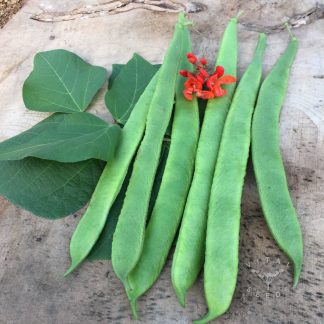
A heritage variety of vigorous growth and productivity. Harvested young as snap beans or matured to be dried and shelled. Scarlet Emperor beans are an old favourite. They are often just grown for their beauty – how great that they can be eaten as well!
The plants have bright red flowers and grow up to 3m tall, producing masses of smooth-textured long green pods that can be eaten as a snap bean. When left to mature they form seeds of a purple colour with black dapples and also make a delicious drying bean.
(Approximate seed count – 30)
 £2.80
£2.80 -
Runner Beans – Emergo (Organic)
£2.85 Add to basketRunner Beans – Emergo (Organic)
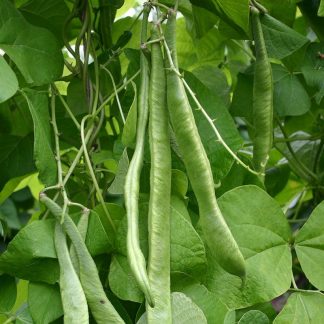
A traditional white flowered variety producing an abundance of smooth pods. Emergo is a great variety which produces well even in our unpredictable UK climate. As well as being delicious and easy to grow its white flowers make a beautiful addition to the vegetable patch, especially when grown alongside a red-flowered variety such as Scarlet Emperor.
(Approximate seed count – 30)£2.85
Showing all 2 results