Climbing French beans
The French beans belong to the Fabaceae family and are a highly variable species that has a long history of cultivation. Its origins are in North and Central America. Beans are often cultivated alongside squash and maize (corn). These three crops constitute the “Three Sisters” which is a way of companion planting integral to indigenous American agriculture.
French beans were brought over to Europe after the Spanish conquest. Today, they are a major crop worldwide thanks to their nutritional properties and particularly as a good protein and energy source.
How to grow beans
How to grow beans
Seed Sowing
Climbing and dwarf beans can be direct-sown outside from May until the beginning of June, when the soil has begun to warm up.
You can also sow seeds into deep modules or small pots undercover from mid-April to May, planting outside into their final position when the risk of frost has passed.
Try doing multiple sowings from April – June to spread out your harvest.
Transplanting
Dwarf beans are useful for more exposed gardens or smaller spaces like raised beds and containers.
For climbing beans, we recommend building the climbing structure first, using bamboo canes distanced 65x40cm (or 50x50cm) apart and then planting four beans at the base of each cane 4cm deep. This way you will know exactly where the beans are planted and you won’t damage the roots when building the structure.
Choose a sunny, sheltered spot in the garden and amend soil with compost or well-rotted manure before planting.
Plant Care
Keep plants well-watered, especially in dry conditions. Some climbing plants may benefit from being wound onto the canes if they don’t attach themselves quickly.
Challenges
Protect young seedlings from slugs and snails and be sure to check for mice damage if your germination seems slow – beans are one of their favourite snacks!
Harvest
Cropping usually starts from around mid-summer, depending on when the seeds were sown, and often continues for eight weeks or more depending on the variety. Pick pods when they are young and tender, before the beans inside are fully formed and the pods become stringy and tough. Regular harvesting (every couple of days) will encourage the plants to produce plentiful flowers for longer harvests.
Seed Saving
If you’re saving beans for seeds, make sure you select some plants specifically for seed early on in the season. They should be healthy, productive and show characteristics that are true-to-type. If you’re saving French beans make sure you grow your seed crop at least 6 feet from another variety to prevent cross pollination between varieties. Runner beans will need to be separated from other bean crops by a much larger distance, up to ½ mile.
To save the seeds, allow the pods to mature fully on the plant until they start to yellow and dry. Pods can be collected individually in wet weather, otherwise harvest the pods all at once and spread out somewhere protected from rain with good airflow until they are fully dry. Once dry, shell out the beans and dry out further until they feel firm. Store in airtight container.
Growing calendar
| J | F | M | A | M | J | J | A | S | O | N | D | |||||||||||||
|---|---|---|---|---|---|---|---|---|---|---|---|---|---|---|---|---|---|---|---|---|---|---|---|---|
| Sow indoors | ||||||||||||||||||||||||
| Sow outdoors | ||||||||||||||||||||||||
| Plant outdoors | ||||||||||||||||||||||||
| Plant undercover | ||||||||||||||||||||||||
| Harvest | ||||||||||||||||||||||||
Key
Showing all 5 results
-
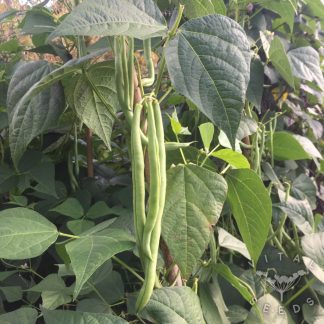

Climbing French Beans – Cobra (Organic)
Price range: £3.10 through £5.80 Add to basket This product has multiple variants. The options may be chosen on the product pageClimbing French Beans – Cobra (Organic)
Prolific and reliable climbing bean with stringless pods of marvelous taste. Cobra is an extremely popular and very reliable French bean variety and an RHS Award of Garden Merit winner. It’s got everything you’ll want from a bean. It produces an early crop of stringless round green pods that have the most delicious flavour.
The showy violet-purple flowers will stand out in your garden and you’ll be surprised at how long your beans will keep coming.
We love them cooked and tossed in vinaigrette when still warm, adding raw onions and a touch of grain mustard.
Approximate seed count: see packet size

 Price range: £3.10 through £5.80
 -
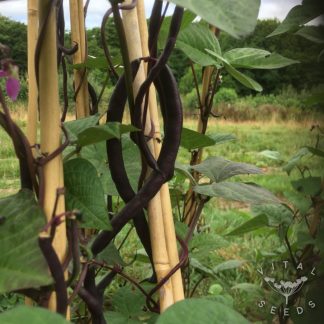
Climbing French bean – Blauhilde (Organic)
£2.95 Add to basketClimbing French bean – Blauhilde (Organic)
A stringless, climbing French bean from Germany producing lots of very dark purple pods that turn green when cooked. We like to grow a variety of different colour beans as they are such a versatile crop. Blauhilde can be grown outside or indoors and makes an excellent market garden variety as it’s productive, disease resistant and exquisite in taste.
(Approximate seed count – 80)£2.95 -
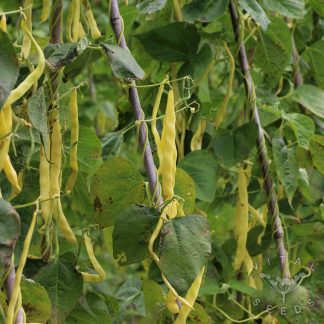
Climbing French bean – Golden Gate (Organic)
£2.95 Add to basketClimbing French bean – Golden Gate (Organic)
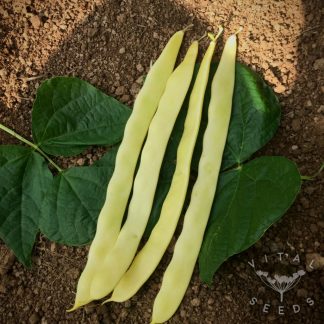
A vigorous climbing French bean producing bright golden yellow pods and dark green foliage. A heavy-cropping pole bean variety that we really enjoy for the buttery, smooth textured beans that will stay tender and stringless even as they get larger. A great addition to your other green and purple beans.
(Approximate seed count – 75)£2.95 -
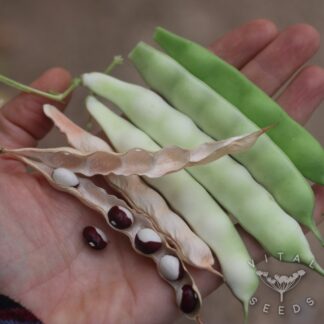
Climbing French Beans – Pea Bean (Organic)
£2.85 Add to basketClimbing French Beans – Pea Bean (Organic)
Stringless flatish pods followed by plentiful fresh beans that turn maroon and cream once dried. This pretty heritage variety of bean has been passed through the weathered hands of generations of gardeners since the 16th century. It’s the ultimate all-rounder providing plentiful flat smooth skinned green pods. As the pods fill out with beans and dry they develop a delightful maroon and cream pattern, great for long storage and comforting winter stews. An easy to grow climbing bean with great drought tolerance and plentiful abundance.
(Approximate seed count – 60)£2.85 -
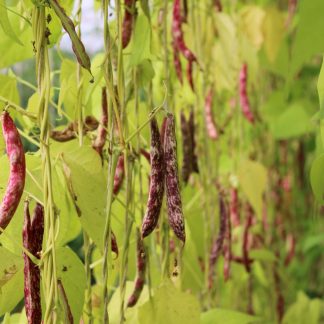
Climbing French bean – Borlotti (Organic)
£2.95Out of stock. Join the waitlist to be notified when this product becomes available.Climbing French bean – Borlotti (Organic)
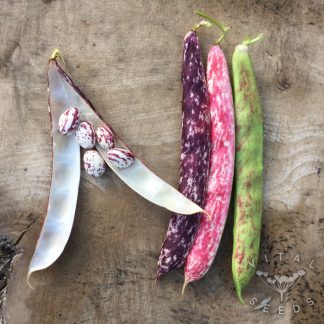
Produces gorgeous bright pink-dappled pods with beans to be used either fresh or dried. Borlotti is one of the most beautiful climbing French bean varieties available. The pods have a stunning colour with dapples of bright pink and white. The bean itself is creamy white with maroon speckles.
We love them for their excellent taste, colour and versatility. Either eat the young pods raw or cooked, or the beans when matured. Just shell and use like a dry bean.They are one of the most popular heritage varieties in Italy and our favourite in the Vital Seeds 2019 bean trials.
(Approximate seed count – 60)£2.95


Showing all 5 results