Vegetable Seeds
Showing 133–144 of 173 results
-
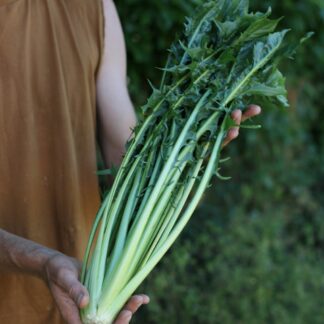

Chicory – Catalogna Gigante di Chioggia (SM4.32) (Organic)
£2.20 Add to basketChicory – Catalogna Gigante di Chioggia (SM4.32) (Organic)
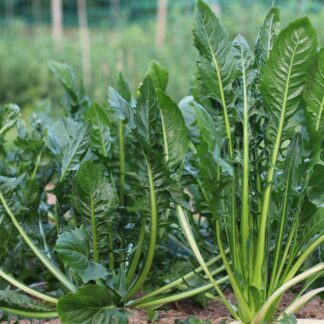
Leaf chicory best used as a delicious sautéing green. Catalogna Gigante di Chioggia – also known as dandelion greens – is an open leaf chicory type which is similar to wild chicory.
The leaves make some of the best sautéing greens around, sweet with a slight bitter edge. They can be blanched in salty water to remove some of the bitterness if desired. Drain and fry up with garlic and chilli for a truly delicious side dish.
More forgiving to grow than some other chicory/radicchio types.
(Approximate seed count – 100)
 £2.20
£2.20 -
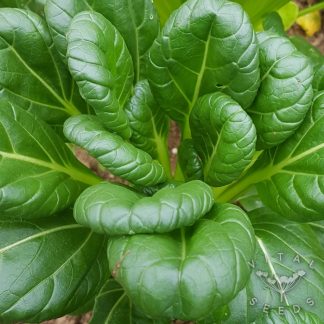
Asian Greens – Tatsoi (Organic)
£1.68 Add to basketAsian Greens – Tatsoi (Organic)
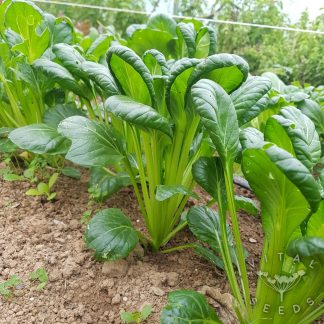
A fast growing variety producing an abundance of flavoursome dark glossy round leaves. Tat Soi produces leaves with a mild mustard flavour and a crunchy texture that can be used raw as a delicious addition to a salad or cooked in a variety of ways. It is a fast growing variety that can be cut at any stage. If the baby leaves are left to mature they become a stunning rosette of broad round greens with a wide, crisp and juicy central stem.
(Approximate seed count – 300)£1.68 -
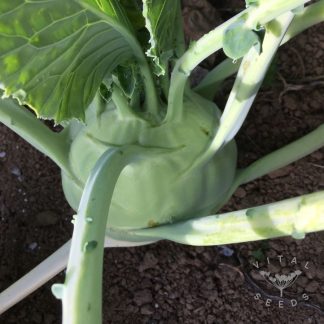
Kohlrabi – Superschmelz (Organic)
£2.20 Add to basketKohlrabi – Superschmelz (Organic)
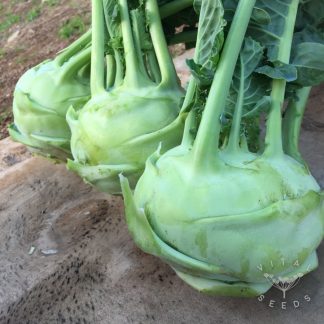
A light-green kohlrabi that will remain tender and sweet to a huge size. If left to grow it can reach up to 8kg. It is resistant to bolting and splitting.
Fred has been growing Superschmelz kohlrabi for years. “It gets huge, it stores really well AND it stays tasty and crunchy!” is his verdict.
We think kohlrabi is best eaten raw in salads or straight from the garden. It is also nice pickled or added to stews and stir fries.
(Approximate seed count – 100)£2.20 -
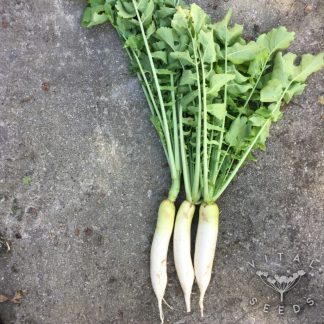
Daikon Radish (Organic)
£2.20 Read moreDaikon Radish (Organic)
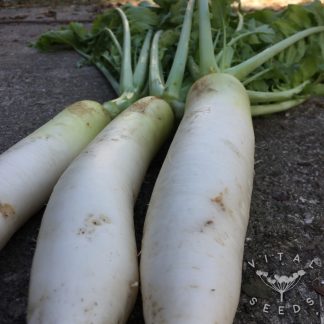
This is a great variety of Daikon radish, also known as Mooli, for sowing in July and August producing long bright white roots which are crunchy and delicious. Its roots can grow huge – up to 3 inches in diameter! It is not too hot and stays very sweet and crunchy. It’s best left in the ground until needed. We have some disagreement on the best way to eat daikons; Fred likes to eat it raw and Ronja’s favourite way is to eat it fermented or pickled. Try both and see what works best for you!
(Approximate seed count – 150)£2.20 -
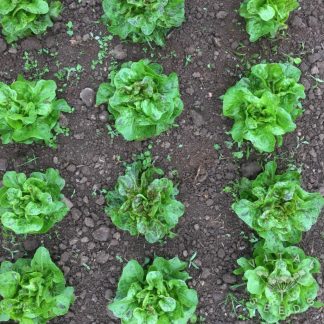
Lettuce – Flashy Butter Oak (Organic)
£1.98 Add to basketLettuce – Flashy Butter Oak (Organic)
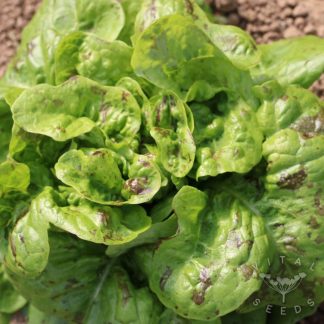
A very pretty and vigorous oakleaf lettuce with dark red splashes all over pale green leaves. This lettuce was bred by Wild Garden Seed in Oregon, USA. It is an open-pollinated variety that was introduced in 2005. It is very versatile, can be picked as baby green, baby head, at full maturity or one leaf at the time. The texture is crispy and smooth, with a delicate and sweet flavour.
(Approximate seed count – 250)£1.98 -
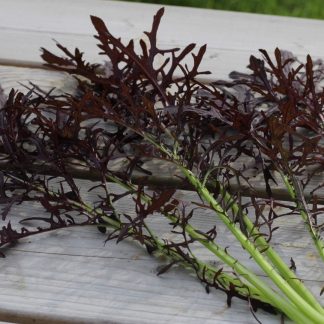
Asian Greens – Purple Frills (Organic)
Price range: £1.88 through £3.80 Add to basket This product has multiple variants. The options may be chosen on the product pageAsian Greens – Purple Frills (Organic)
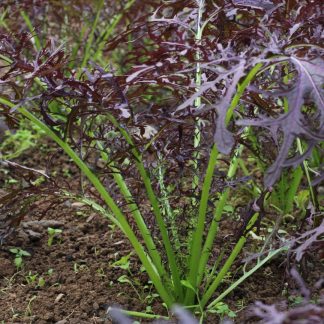
An abundant, colourful, delicate variety of mustard which gets punchier as the season continues. Purple Frills has beautiful burgundy tinged, spidery leaves. It adds interest to any salad with its hot mustardy flavour. It can also be cooked and used a spicy spinach alternative. It is abundant in its growth and will continue throughout the coldest weather.
(Approximate seed count – 250)Price range: £1.88 through £3.80 -
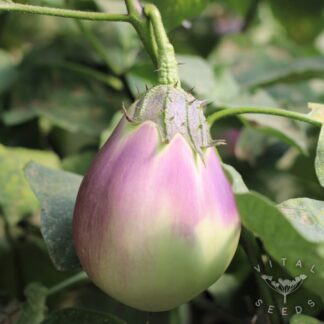
Aubergine – Cesky Rany (Organic)
£2.10 Add to basketAubergine – Cesky Rany (Organic)
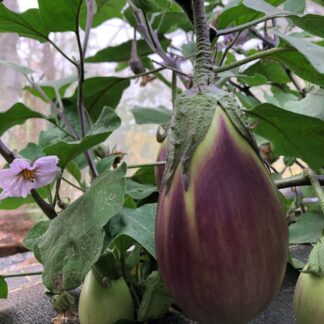
Robust plants producing early violet fruits that have aromatic light green flesh.
This old variety originates in Czechia with “rany” literally translating to “early”. It is robust, productive and can deal with colder conditions than other aubergines. In the warmer and drier areas of the country it will even do well when grown outdoors.
The fruits are really pretty with their oval, drop like shapes and colours ranging between dark and light violet. Occasionally the green part at the top, the calyx, leaves patterns on the skin of the fruits which got us very excited about growing them.
(Approximate seed count – 15)
£2.10 -
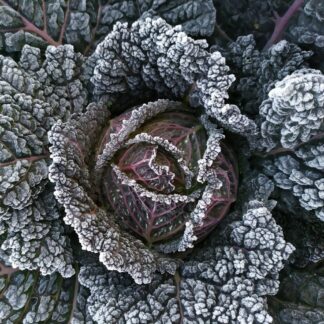
Cabbage, Winter – Verza Moretta (Organic)
£3.50 Add to basketCabbage, Winter – Verza Moretta (Organic)
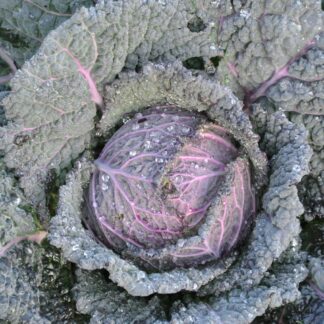
Fantastic traditional ‘Veronese’ purple Savoy cabbage with bright green centre. This striking variety has been cultivated in the countryside around the Adige river in Italy since the nineteenth century and is on the official list of traditional rare varieties.
It has purple and green outer leaves and bright green-yellow centres. Forms a compact head with a sweet flavour, perfectly suited to salads, soups, and risottos. (Approximate seed count – 50)
£3.50 -
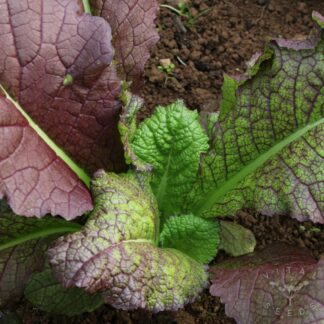
Asian Greens – Giant Red Mustard (Organic)
£1.80 Add to basketAsian Greens – Giant Red Mustard (Organic)
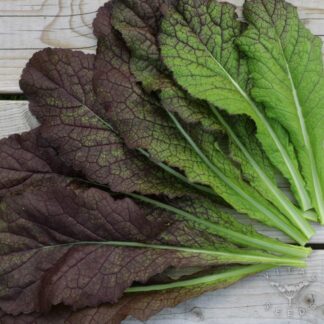
Purpleish-red and green mustard with large leaves and a fiery spice. The young leaves are of a succulent, delicate and peppery flavour. When harvested fully matured, the leaves might surprise you with their bold flavour. When cooked or steamed like other greens however the taste will be mild and similar to spinach or chard. Giant Red Mustard seeds are also excellent for sprouting.
(Approximate seed count – 330)£1.80 -

Courgette – Tondo di Nizza (Organic)
£3.00 Add to basketCourgette – Tondo di Nizza (Organic)
A round pale green courgette with a delicate skin and fine flavour. If you’re looking for something a little bit different in your courgette patch, Tondo di Nizza would be a good choice. It is an Italian heritage variety that provides you with an abundant crop of round courgettes. Best harvested when approximately 10cm in diameter, just before the skin darkens in colour.
(Approximate seed count – 12)£3.00 -
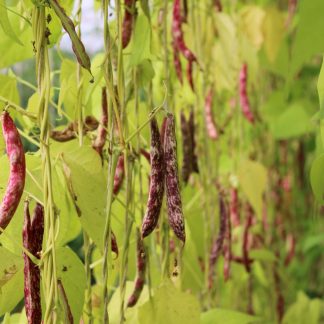
Climbing French bean – Borlotti (Organic)
£2.95 Read moreClimbing French bean – Borlotti (Organic)
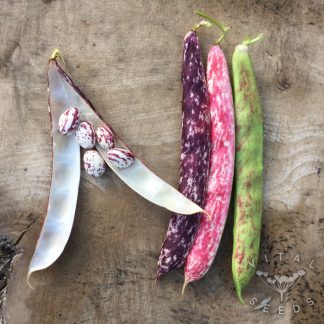
Produces gorgeous bright pink-dappled pods with beans to be used either fresh or dried. Borlotti is one of the most beautiful climbing French bean varieties available. The pods have a stunning colour with dapples of bright pink and white. The bean itself is creamy white with maroon speckles.
We love them for their excellent taste, colour and versatility. Either eat the young pods raw or cooked, or the beans when matured. Just shell and use like a dry bean.They are one of the most popular heritage varieties in Italy and our favourite in the Vital Seeds 2019 bean trials.
(Approximate seed count – 60)£2.95 -
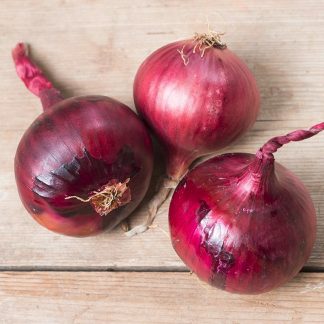
Onion – Red Baron (Organic)
£2.25 Read moreOnion – Red Baron (Organic)
A mid-late variety with deep red skin, suitable for storage as well as bunching when young. Red Baron is a classic red onion producing large globe-shaped bulbs with a punchy flavour. They can be grown as a main-crop onion but are also suitable for bunching when picked young.
(Approximate seed count – 350)£2.25

Showing 133–144 of 173 results