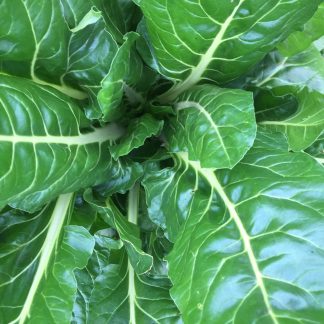
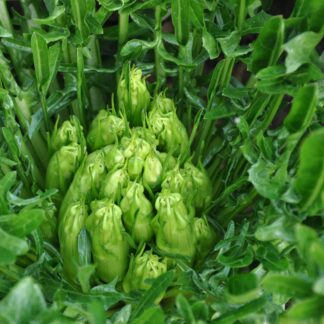
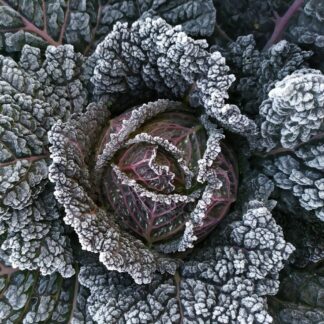
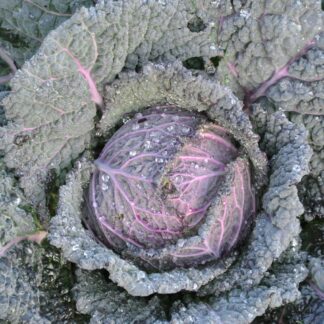
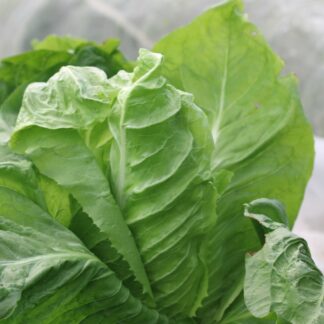
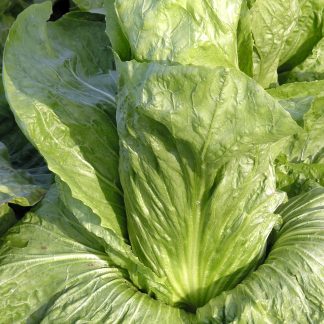
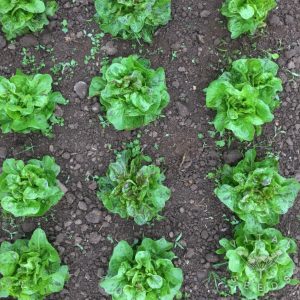
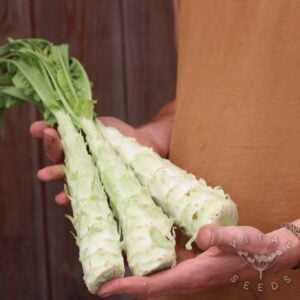
Lettuce tips: Shallow sow in drills 30cm apart, or sow in modules and transplant to final position.
Summer crop: sow from March outdoors, or early Feb indoors, protect from frost.
For an autumn/winter crop sow in early August.
For late winter/early spring crop sow in September/October.
CHOOSE AN APPROPRIATE VARIETY FOR THE SEASON
An invaluable hardy winter salad for growing outdoors and under cover with a superb nutty flavour. Corn salad or lamb’s lettuce is a small annual plant that forms rosettes of dark green leaves which have a gentle nutty flavour, soft texture, and are extremely popular as salad greens.
Seed Sowing
Sow corn salad between July and October for autumn, winter and early spring harvests. Seeds germinate best in cool, moist soil (5-15°C), but be patient – they can take up to 12 days to sprout. Sow in shallow drills or broadcast and cover lightly with soil. Ensure continuous harvest by sowing every 2-4 weeks.
Transplanting
Plant out from modules once seedlings are established, spacing plants 25cm apart. It requires little to no protection from the cold so can be grown both outdoors or under cover.
Plant Care
Keep the area weed-free and consistently watered during hot spells to reduce risk of bolting. You can mulch around the plants to keep in moisture and prevent weeds. Corn Salad is frost hardy and suitable for growing outdoors with little protection or under cover in the cold.
Challenges
Generally pest and disease-free, things to look out for are slugs or powdery mildew.
Harvest
You can either cut the whole plant at the base once 6-8 leaves have formed or pick a few of the outer leaves from each plant to encourage regrowth.
We were surprised by just how hardy Corn Salad was in our winter garden – we feel it’s a must have addition to any veg patch for the simple joy of being able to do outdoor harvests all winter long.
Culinary Ideas And Uses
Corn Salad has a superb nutty flavour and is great raw on its own with a lemon balsamic dressing or mixed into a salad with Claytonia, oriental leaves and winter lettuce. It is a good source of Vitamin A, C, B6, Iron, Phosphorus and Potassium.
Seed Saving
Choose plants that are true to type, healthy and have shown pest resistance. Avoid early bolters.
Allow plants to flower and produce seed pods that will begin to dry. Pull up entire plants and hang upside down, laying a sheet underneath to catch the seeds. Winnow any extra plant material and allow the seeds to dry further in a warm, dry space for a few more days.
Store in a cool dark place; seeds should remain viable for around 5 years.
Salad leaf with a peppery fresh taste, most commonly used raw but can be cooked, too. The nutritious dark green serrated leaves add their fine spice to salads, pasta, pizza, pesto, other sauces or as garnish. Salad rocket is native to the Mediterranean and has a long history of popularity. It is quick to crop and easy to grow and definitely one of our favourite salad leaves.
(Approximate seed count – 900)
An invaluable hardy winter salad for growing outdoors and under cover with a superb nutty flavour. Corn salad or lamb’s lettuce is a small annual plant that forms rosettes of dark green leaves which have a gentle nutty flavour, soft texture, and are extremely popular as salad greens. It provides a valuable source of fresh greens during the autumn and winter months as it is suitable for growing outdoors with little protection or under cover in the cold.
We are amazed by this plant’s hardiness and really enjoy growing it! Ronja grew up eating ‘Feldsalat’ (German for corn salad) almost every day during the winter months and wouldn’t want to live without it.
A must-have excellent winter leaf of mild flavour and incredibly succulent, soft and juicy texture.. Winter purslane, also known as miners lettuce or claytonia, has heart-shaped elegant looking leaves which are small, abundant and make a great cut-and-come-again salad green. You will get a productive harvest all winter and early spring and if left to self seed, it will just keep coming back year after year.
It is one of those greens that come up in just the right moment when we’re most in need of something fresh and it self-manages very well which is why we like it too.
(Approximate seed count – 850)
Delicious and spicy serrated leaves, smaller and more delicate than their cultivated cousin. We love wild rocket as it just keeps on giving, even once it is going to seed it continues to produce new leaf growth if you cut it back.
(Approximate seed count – 500)
A must-have excellent winter leaf of mild flavour and incredibly succulent, soft and juicy texture. Winter purslane, also known as miners lettuce or claytonia, has heart-shaped elegant looking leaves which are small, abundant and make a great cut-and-come-again salad green. You will get a productive harvest all winter and early spring and if left to self seed, it will just keep coming back year after year.
Seed Sowing
Sow between August – September for winter and early spring harvests. Sow seeds in well-watered seed drills or broadcast sparsely, keeping moist to aid germination. Seeds can also be module sown, planting out after 3-4 weeks. Claytonia prefers temperatures below 12 degrees to germinate well.
Transplanting
Thin direct sown plants to 10cm apart. Plant out from modules once seedlings are established, spacing plants 10cm apart. Claytonia tolerates mild frosts but is better grown under cover for harvests all winter.
Plant Care
Keep the area weed-free and consistently watered. You can mulch around the plants to keep in moisture and prevent weeds.
Challenges
Generally pest and disease-free, young leaves of Claytonia are a favourite of slugs and snails. Keep grass around veg beds short and remove any potential slug habitats like sandbags or wood.
Harvest
You can either cut the whole plant at the base once a large head has formed or pick a few of the outer leaves from each plant to encourage regrowth.
Culinary Ideas And Uses
Claytonia is high in Vitamin C and was thought to be used by miner’s to ward off scurvy in the gold rush. It can be cooked like spinach but we prefer it raw as part of a winter salad.
Seed Saving
Choose plants that are true to type, healthy and have shown pest resistance. Avoid early bolters.
Watch the plants carefully once they’ve started to flower as seeds will form and drop before the plant begins to fade. Pull up entire plants and hang them to dry over a pillowcase to collect the seeds.
Alternatively dig up flowering plants to where you wish the seeds to be sown and allow them to drop seeds naturally.
Store in a cool dark place; seeds should remain viable for around 5 years.
Salad leaf with a peppery fresh taste, most commonly used raw but can be cooked, too. The nutritious dark green serrated leaves add their fine spice to salads, pasta, pizza, pesto, other sauces or as garnish. Salad rocket is native to the Mediterranean and has a long history of popularity. It is quick to crop and easy to grow and definitely one of our favourite salad leaves.
(Approximate seed count – 900)
An invaluable hardy winter salad for growing outdoors and under cover with a superb nutty flavour. Corn salad or lamb’s lettuce is a small annual plant that forms rosettes of dark green leaves which have a gentle nutty flavour, soft texture, and are extremely popular as salad greens. It provides a valuable source of fresh greens during the autumn and winter months as it is suitable for growing outdoors with little protection or under cover in the cold.
We are amazed by this plant’s hardiness and really enjoy growing it! Ronja grew up eating ‘Feldsalat’ (German for corn salad) almost every day during the winter months and wouldn’t want to live without it.
A must-have excellent winter leaf of mild flavour and incredibly succulent, soft and juicy texture.. Winter purslane, also known as miners lettuce or claytonia, has heart-shaped elegant looking leaves which are small, abundant and make a great cut-and-come-again salad green. You will get a productive harvest all winter and early spring and if left to self seed, it will just keep coming back year after year.
It is one of those greens that come up in just the right moment when we’re most in need of something fresh and it self-manages very well which is why we like it too.
(Approximate seed count – 850)
Delicious and spicy serrated leaves, smaller and more delicate than their cultivated cousin. We love wild rocket as it just keeps on giving, even once it is going to seed it continues to produce new leaf growth if you cut it back.
(Approximate seed count – 500)
Extremely productive red cherry tomato bred for its fine flavour. We consider this a farm-original variety as we have done extensive improvement on the original. We have been stabilising the line for 5 years and it’s now ready to send out into the world!
The plants have been selected each year for the best flavour and excellent productivity. Despite the name, the fruits don’t taste of mango – Mango Lassi was named after a volunteer’s impression of the flavour, and the name has stayed. We hope you enjoy it. We would appreciate any feedback you have on it.
(Approximate seed count – 20)
A bright red greenhouse tomato with an exceptionally aromatic flavour, bred specifically for organic cultivation. This variety was bred 1996 in Germany by Ulrike Behrendt. Flavour and resistance to fungal disease was the main focus of the selection. It can deal well with a low intake of nutrients which promotes good taste. The firm fruits should be left on the plant until fully coloured and will keep for a long time on the plant. They can be stored and will also after-ripen. The plant has strong dark green almost shiny leaves, and short internodal length.
Ruthje stands out for its aromatic taste and was one of our favourites in the 2018 tomato trials. If you only wanted to grow one kind of tomato, this would be an excellent choice.
(Approximate seed count – 22)
Medium sized beefsteak tomato with dark, almost black colours streaking down into orange and red. This productive indeterminate tomato variety was bred by fellow seed enthusiasts at Wild Mountain Seed in the US. The anthocyanins causing dark purple to black shoulders that stripe down into red and orange make them a real head turner.
They have a deep sweet and slightly acidic flavour. We have enjoyed them with our lunches simply with a bit of olive oil and a sprinkle of salt on toast, yet they make a great tomato sauce too.
Delicious yellow-orange cherry tomato with fruits 2-3cm diameter . Santiam Sunrise is without a doubt one of the tastiest tomatoes we have ever encountered. It is Fred’s all time favourite for flavour. The fruits are 2-3cm across, growing on strong, stocky indeterminate vines.
Originally bred by the great Adaptive Seeds in the US as an open-pollinated alternative to the famous Sungold F1. The flavour is intensely fruity with a delicious zinginess. We recommend growing it under cover for best results. A real winner.
(Approximate seed count – 25)
Upright plants producing lots of heavily savoyed dark green leaves. Surely this is the king of kales! We always grow masses of Nero di Toscana, we cant get enough of it. It has been a staple of Italian cuisine for centuries and heavily features in the iconic ‘Ribollita’ Tuscan bean stew.
Although usually steamed or stir-fried, kale leaves can also be massaged raw with a little olive oil, salt and lemon juice and made into a salad. Well worth a try if you haven’t already!
(Approximate seed count – 150)
Cavolo Nero-type kale of dazzling blue and green coloured leaves with exceptional pink midribs. This showy kale was bred by Hank Keogh from Avoca Farm in Oregon, USA. He back-crossed ‘Lacinato rainbow’ with the Wild Garden Seed ‘Lacinato’. In looks it resembles a Cavolo Nero kale and it has stunning blue, green and pink colours. The leaves are savoyed and have underturned margins, the plant grows upright and is very cold-hardy – more so than any other Cavolo Nero type kales. Tender and tasty, great for sautéing, steaming or finely chopped in a salad. A solid vegetable for the home or market garden.
Pentland Brigg or Pentland Brig (Scottish for Bridge) is a superb heritage kale which is the result of a cross between Dwarf Green and Thousand Headed kale. With parents such as these it’s no wonder this is such a great variety.
In form it is very much in between it’s parents, being slight less curled than Dwarf Green but more curled than Thousand Headed. It is extremely cold hardy and produces an abundance of sweet and delicious shoots in the spring which can be eaten like sprouting broccoli (known as kale raab).
A hardy kale with a compact growth habit and tightly curled leaves. A deep green leaf colour and frilled edges with a succulent delicate flavour make this variety an attractive kale to grow. It is extremely hardy and withstands frosts in the winter when no other brassica stays standing while also producing well when sown in spring for a summer harvest. It is a Scottish heritage kale dating back to the 19th century, originally known as ‘Dwarf Curlies’ or ‘Scotch’ kale. It grows to only 40cm high making it perfect for windswept sites or for growing in containers.
(Approximate seed count – 150)
Red, purple and blue-green leaf colours with slight ruffling on the edges, cold resistant and vigorous. A Frank Morton cross from Wild Garden Seed in Oregon, USA of Cavolo Nero ‘Lacinato’ and Redbor hybrid kale. The majority of the plants have savoyed, blue-green leaves with ruffled edges, others are more purple or more white, some have more ruffling and others less. When grown outdoors the colours will intensify with the cold. It is a hardy and very beautiful kale tasting. sweet and aromatic.
We planted ‘Lacinato rainbow’ in our 2018 trial and relished in this diverse variety that tastes amazing and is more funky and cold-resistant than the usual Cavolo Nero
Recognisable by its flat, purple-tinged and tooth-shaped leaves; this kale is hardy, frost tolerant and very versatile. A productive plant, it reaches 90cm in height and can be harvested throughout the winter becoming sweeter after a frost. The tender young leaves are great in salads and larger leaves are attractive as well as delicious. This kale is so tasty you can eat it on its own, but it’s also a perfect addition to smoothies, salads and stir fries. You can get in the habit of adding it to most meals! In Scotland, kale used to be a mainstay of the traditional diet. So much so that to be “off one’s kail” means to feel too ill to eat.
An unusual ultra-frilly Red-Russian type. Bear Necessities has leaves unlike any other kale as it was bred from a cross between a mizuna and a kale. It’s ultra frilly leaves lend themselves to salads when young and are great cooked when larger.
The leaves have a high volume and surface area which means they stir-fry particularly well, easily getting coated in delicious flavours and holding their shape.
Delicious and spicy serrated leaves, smaller and more delicate than their cultivated cousin. We love wild rocket as it just keeps on giving, even once it is going to seed it continues to produce new leaf growth if you cut it back.
(Approximate seed count – 500)
The classic spring onion. Long white stems with bright green tops, suitable for both spring/summer cultivation as well as over-wintering. This is traditionally the most popular variety of spring onion, and an essential addition to the veg patch. Quick, hardy and easy to grow. Its speed of growth makes it ideal for catch-cropping and year-round cultivation, with its small size meaning it can be easily squeezed into unused corners of the garden.
Spring onions are an extremely versatile culinary ingredient. Delicious both cooked and raw, they are a staple of our diet!
(Approximate seed count – 300)
A green winter-hardy butterhead lettuce with great taste and texture. We wanted to include Valdor amongst our lettuces because it is simply one of the best winter lettuces there is. It forms tight medium-sized heads with the classic look of a butterhead. Sown in September, it can be cultivated outside or undercover for continuous picking or left to mature for an early spring harvest.
(Approximate seed count – 250)
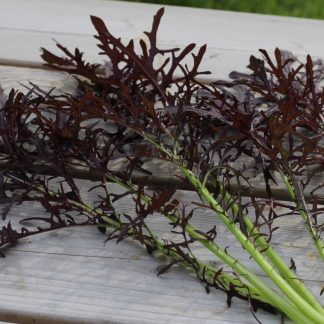
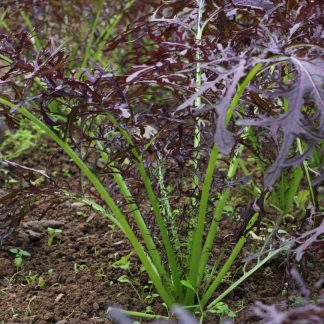
A striking variety of mizuna with lime green leaves and purple stems. This beautiful new mizuna variety is apparently taking the Japanese foody-scene by storm! It’s similar in taste to green mizuna and is delicious raw in salads or cooked in stir-fries.
With its contrasting colour scheme it’s a real head-turner and is certain to impress.
A classic Spanish tapas variety, mild when picked young, very hot if left to mature. Padron is a stand-out favourite pepper variety for us. Traditionally the fruits are picked when small and green before they have developed much heat. If left on the plant a bit longer they will get very hot, and sometimes one slips through the net, hence the Russian roulette associated with this variety.
As the fruits do not need to ripen you can start picking them early in the season so Padron is a good choice for the UK climate where some peppers struggle to ripen in our short and cool growing season.
Pick when the fruits are between 1.5 and 3 inches long, the longer they are the more chance of a hot one!
One of the best chillies for growing in the British climate. Long and pointed fruits, starting green and ripening to red.
This is a reliable, quick growing and heavy cropper producing early fruits that continue to appear throughout the season. It’s a a really excellent variety, bearing long pointy peppers in attractive shades of green, yellow, orange and red.
The distinct heat develops alongside the ripening colour, ranging from 1000-15000 scovilles making it a great multi-tasker in the kitchen. Delicious in chilli jam, perfect for pickling and drying as well as for using fresh, the spicy kick of a yellow hotwax stuffed with cream cheese are legendary for summer picnics. It will happily grow on a sunny windowsill, greenhouse or polytunnel. In some areas of the UK you can grow it outside in a sunny sheltered spot.
Crinkly yellow chilli with a hot lemony flavour with a wide range of culinary uses. One of our most popular chilli varieties with a bushy growth habit and lots of fruits ripening from green to yellow.
The variety is also called Aji Limon and originates from Peru where it’s used as a seasoning pepper. Rating 30,000-50,000 SHU (Scoville heat units) it is quite a spicy one ideal for making your own hot chilli sauce with an extra citrusy twist or add it to stir fries, tomato sauces or your scrambled eggs.
To get good germination temperatures of 28° – 30°C are recommended. Germination can be slow and take three weeks or more. As it is thought to be genetically slightly closer to its wild relatives, there is some apparent seed dormancy which can affect germination rates. We have included a higher number of seeds in the packets to ensure you get enough plants.
(Approximate seed count – 23)
Remarkable chilli/pepper variety of sweet flavour with a fruity heat. Discovered by Adam Alexander in a market in Donetsk, Ukraine in 1989, this sweet and gently spiced pepper has been grown in South Wales ever since with plants selected for earliness and flavour. The fruits are slightly ribbed, flattened, and about the size of an apple. When eaten fresh they are exceptionally sweet, crunchy, and full of flavour, with a subtle heat towards the top of the fruit that makes them per definition a chilli, although we think of it more like a pepper.
Plants are short, stocky, and very productive, with red fruits that hold well once ripe. They can be grown outdoors in a sunny spot or under cover.
Firm favourite across the Vital Seeds team and number one winner of our 2023 pepper and chilli trials.
(Approximate seed count – 20)
A beautiful and early salmon-pink radicchio variety forming loose heads from October. This one is a real show-stopper! A really unique radicchio making the most exquisitely pink leaves unlike no other leafy veg we have grown before.
‘Jolanda’ is an early selection of Rosa (which often tends to be a later-cropping type) so it’s much better suited to the UK climate.
Bred by our friends and plant breeding wizards at Smarties.bio in Italy. (Approximate seed count – 100)
Fantastic modern Palla Rossa type radicchio forming large round heads.
This is a wonderful new Radicchio variety much celebrated by market gardeners due to the high consistency of its heads which can be harvested from September until December. The leaves can be eaten raw as a delicious addition to winter salads, or they can be sliced and baked with olive oil and balsamic. (Other recipes are available too)
A mid-early Treviso-type radicchio ideal for both salads and cooking (similar in growth cycle to 206TT). Treviso is one of the main centres of radicchio production in Italy.
This variety produces dense elongated heads, of striking deep red and white appearance which can be harvested from autumn.
The leaves make a wonderful addition to raw salads as they are sweeter than some red headed radicchio types. The heads are equally tasty grilled or sautéed as is commonplace in Italy.
Stunning extra early radicchio best suited for raw salads. Castelfranco radicchio varieties are considered the queen of salad leaves. Their exquisite beauty will add something very special to your salad bowl, and their flavour is much sweeter than other radicchio types.
The plants begin with broad open green leaves, developing a central head as they mature. The inner leaves take on a pale yellow colour with beautiful burgundy speckles.
Sometimes know as “Tulip of Winter” as the heads are opened up to display their full glory in the produce markets of Italy.
(Approximate seed count – 100)
Apricot to peachy colours with a soft pink towards the centre. This cosmos is unlike any other we have seen. The blooms appear to have a iridescent glow which is quite remarkable. They are a head-turner to say the least!
A stunning snapdragon variety producing spikes of single petalled blooms in varying hues of pink, peach and white. This has been a real show stopper and we’ve taken great delight in the variety of delicate colour combinations it produces and its popularity with pollinators. Appleblossom produces abundant long stemmed blooms perfect for cutting or fits delightfully in a cottage garden border.
(Approximate seed count – 500)
A unique form of scabious bred for its delicate lantern-like seed heads. Sternkugel is the perfect choice for the dried flower enthusiast, producing beautiful pale blue pincushion flowes turning into decorative seed heads great for adding interest and sculpture to arrangements or bouquets.
(Approximate seed count – 30)
A beautiful multi-headed sunflower with blooms of crimson dappled with vanilla. Floris is a really special variety and all of our team are big fans! Each plant makes around eight blooms, reaching about 4-5 feet tall. As the season goes on the blooms show more vanilla colouring and take on a vintage hue.
(Approximate seed count – 24)
A long-stemmed sweet pea variety producing delicate blooms in a peach-blush. Castlewellan’s blooms are sweetly scented and the plants have a long flowering season and a vigorous growing habit. Perfect for cutting with a vase life of up to 5 days.
(Approximate seed count – 15)
A herbaceous perennial plant with stunning pink/ purple flowers late into the Autumn. Echinacea is one of the more well-known and studied medicinal plants, and because of overharvesting of wild populations has now become rare in the wild. The flowers are also beautiful in the garden and lovely as a cut flower. It grows easily in this climate, although prefers a well-drained spot as the roots can get damaged in wet winters. The new spring growth is also very attractive to slugs and may need some additional protection.
(Approximate seed count – 30)
Tidepool produces an incredible mix of large, vibrant blooms with striking jewel tones and amazing anemone-like petals. We have been overjoyed observing this variety grow in our polytunnels. It has produced abundant blooms and tall stems all summer long and is a must-grow for any cut flower enthusiast
(Approximate seed count – 50)
One of the oldest and most popular sweet pea varieties with pink and white flowers and a fragrant scent. Painted Lady is bi-coloured and sweet scenting with delicate pink and creamy white flowers. It is one of the oldest sweet pea varieties and has been grown in England for centuries. It makes a great cut flower and is a delight for every garden.
An ever popular cut flower great for drying, adding unusual colourful stems perfect for arranging . With bright yellow globes on upright stalks, this variety is a must for the dried flower enthusiast. It can be treated as a perennial with extra protection over winter, resulting in larger and more abundant blooms in the second year.
(Approximate seed count – 100)
A wonderful multi-headed variety, particularly for cut flower use. This beauty has become a huge hit on the cut flower scene, producing around eight strong stems per plant. The blooms are a compact 10-15cm diameter, with striking with deep yellow petals and dark centres. The plants are fairly small, growing to around three to four feet tall.
Stunning variety of Black Eyed Susan that produces single or double flowers with soft brown centres in glorious shades of caramel, copper and pink. The soft mix of colours of the blooms make this a great choice for the cutting garden. They pair beautifully with late summer blooms like amaranth and sunflowers. For maximum vase life pick when the buds are just about to open.
(Approximate seed count – 100)
A beautiful and highly productive sweet pea producing an abundance of delicate cream blooms. This is Ronja’s favourite sweet pea of 2023, producing a huge amount of incredible blooms, the performance was incredible and beautiful in its simplicity. The scent of the flowers wafting through the field in July brought a very special feeling to the patch and we were sad to see the blooms go. Luckily they were followed by lots of plump seed pods which we were equally excited about as now we can offer this variety to you!
(Approximate seed count – 23)
A very large yellow variety of sunflower, producing impressive blooms up to 30cm in diameter. No surprises here! This is a sunflower that does exactly what it says on the tin. Tall and sturdy plants producing huge single yellow flowers. The flowers are much loved by bees and if you leave the plants over the winter they provide a valuable ecological role as winter bird food (the seeds) and a habitat for many insects (the stems). If you have heavy clay soil, incorporating the remains of the plants into the soil in spring will lighten the soil due its high carbon content.
We always grow loads of sunflowers, dotted in amongst our other crops. They are really easy to grow and bring such a shameless joy to the garden. They are pure flower and nothing else!
A tall variety producing an abundance of multi-coloured blooms. This is a wonderful and vibrant helichrysum mix, whose bright blooms look like delicious boiled sweets!
The blooms lend themselves to both fresh and dried flower arrangements so are a great all-rounder.
(Approximate seed count – 200)
The Hopi Black Sunflower is a heirloom variety stewarded by the Hopi people who used it’s dye in fabrics for basketry. Easy to grow and with a branching stems that can also be used for cutting, this variety is a wonderful addition to the dye and ornamental garden. Growing up to 3m in height with spectacular large flower heads, the seeds can be harvested to produce a beautifully rich dark purple dye.
(Approximate seed count – 25)
A beautiful variety producing blooms of peach, salmon and pale orange. This is probably our favourite variety of helichrysum, its subtle and delicate tones look stunning in a bouquet or vase. The cut stems can be hung up and dried for use in winter flower arrangements or just left hanging as decoration.
(Approximate seed count – 200)
Eye-catching flowers with gentle fizzing tones of watermelon pink, white and apricot. These beauties are great as cut flowers or for filling borders with sumptous bursts of colour. this is a short lived hardy perennial often grown as a biennial here in the uk, flowering from June- August.
Best sown thinly under vermiculite or sand and watered from below as the seeds are very small, plant out as soon as 2 true leaves have formed, they do not like root disturbance so handle gently.
(Approximate seed count – 250)
A gorgeous variety producing pale buttery-yellow blooms with single petals. No garden would be complete without a few Cosmos plants, with their long stem length, abundant blooms and long flowering window.
Kiiro is a lovely addition to our collection, with a soft delicate colour palette. Like other Cosmos, it’s very easy to grow and great for beginners, also being suitable for pot growing as well as the garden border.
(Approximate seed count – 70)
A stunning cosmos variety with mottled and flecked double petals in gradients of magenta and white. An unmissable addition to any cutting garden, cosmos are a workhorse for cut flower enthusiasts. They are easy to grow, great for pollinators and provide endless blooms throughout the summer with long upright stems.
(Approximate seed count – 70)
Dark red almost black velvety blooms on long stems, a favourite in the flower garden.
We were absolutely taken by this elegant flower with dark crimson to burgundy colours, some really going into black with contrasting creamy white stamen. This scabious makes an amazing cut flower and keeps impressing throughout the summer months. Flower heads make way for lovely seed heads with the shape of pin cushions.
Can be used as a dye flower producing over green and blue to purple dyes depending on mordant and modifiers.
A delightful everlasting flower, with delicate daisy-like flowers on tall, branching stems. Bearing flowers all summer long, from June – September, this variety is an excellent addition to a cutting garden and dries beautifully for winter arrangements.
(Approximate seed count – 500)
A popular, low-maintenance annual flower with white, pink and lilac petals and a yellow centre. Single, daisy-like flowers in purple, pink or white that will bloom from early summer to autumn. Cosmos is easy to grow, it’s great for bees, butterflies and hover-flies and makes a lovely cut flower, too.
We like planting it in between food crops as an ornamental divider.
(Approximate seed count – 100)
No dye garden would be complete without the addition of Coreopsis, otherwise known as Dyer’s Tickseed. With cheerful beautiful blooms of bright yellow and a ruby heart, Coreopsis flowers produce a beautiful warm orange natural dye. It’s also a beautiful addition to the garden border for it’s tall stem length, drought tolerance and long flowering window, producing masses of flowers from midsummer to autumn.
(Approximate seed count – 300)
A breath-taking rainbow of pastel shades including buttercream, peach, coral, blush and raspberry. This is a truly stunning yarrow mix and such a joy to grow. Predominantly gentle shades punctuated by the occasional magenta shock.
Ideal for cutting due to their very long stems and vase life of up to 7 days.
(Approximate seed count – 350)
Bright shades of blue flowers attractive to bees and other pollinators, great as cut flower as well. A flower that makes every garden happy. Cornflowers produce masses of stunning blue shaded blooms and attract bees and other insects as well. They were once native to European corn fields, but have mostly disappeared from the landscape due to large scale use of herbicides. Today they are mainly fond in gardens and allotments – we grow them in amongst our vegetables.
(Approximate seed count – 200)
A beautiful and deliciously fragrant lupin producing multicoloured blooms of azure blue, white and yellow. We are really wowed by this variety, and frequently stop just to admire it when we walk past it in the field.
The incredibly cheerfully coloured blooms are borne on strong stems making it ideal for cutting as well in the border.
(Approximate seed count – 25)
Visnaga is a robust version of Ammi, producing dense and delicate white flowers perfect for the cutting garden. Ammi Visnaga is hardy annual that produces an abundance of white frothy Angelica-like flowers with delicate green foliage. It can grow up to 120cm tall and is a fantastic addition to any ornamental garden or as a cut flower for bouquets or arrangements from June – September.
(Approximate seed count – 1000)
A variety of carrot bred for its white delicate umbels that turn pink once opened. Dara is a staple in any cut flower garden, producing abundant delicate stems that are often ready just as Ammi finishes. They are a fantastic variety for pollinators and attract a wide range of beetles, hover flies and bees. The seed heads are good for drying and it be autumn sown for early blooms in spring.
(Approximate seed count – 150)
A beauty of the garden with radiant star-like colourful blooms. Gardeners and insects alike love asters. They are great for bringing in beneficial insects to the garden. We love this annual mix due to the variety of colours it produces.
With a sprawling daisy-like habit and blue-green foliage, it’s cheerful blooms produce a bright cadium yellow natural dye. This variety is a short-lived perennial and like other chamomiles it will self seed in situ to grow again the next year.
(Approximate seed count – 300)
An essential annual grass for cut flower growers, Briza Maxima adds delicate beauty to any arrangement or garden. This variety is also known as Greater Quaking Grass which describe its beautiful heart shaped heads that nod in the breeze and shine as they catch the light. Briza Maxima produces stems from June – August and is also great for drying, turning straw-coloured when dried.
(Approximate seed count – 200)
Stunning scabious-flowered variety producing blooms of creamy peach, salmon and apricot. This beautiful variety is a new favourite for us. Its delicate colour palette and long strong stems makes it ideal for bouquets.
With delicate white flowers and easy to pair stems, this is a great addition to any cut flower garden. The beautiful lace-like umbels of Orlaya Grandiflora work well as great filler for early spring bouquets and the more you cut, the more blooms you will be rewarded with.
(Approximate seed count – 50)
A striking biennial, Mullein is a tall, architectural plant with soft, silvery leaves and towering spikes of bright yellow flowers in its second year, growing 1 to 2m tall. It is a fantastic addition to wildlife gardens, attracting bees, butterflies, and other pollinators. Mullein thrives in poor, well-drained soils and is highly drought-tolerant. Historically used in herbal medicine for respiratory support.
(Approximate seed count – 150)
Loved by bumblebees, this variety has velvety crimson petals with silver-cream throats, making a stunning display in borders and a perfect addition to cut flower arrangements. The foliage is dark compared to many other varieties, and the petals are a lesser known edible flower – great as a garnish on salads or as decorations on cakes.
A striking flake variety with maroon-grey speckles on a white background. Nimbus is a real show-stopper variety producing a mass of bicolour blooms on very long stems. The petal edges have a dark maroon strip and their scent is delicious. Definitely a must-have variety.
(Approximate seed count – 23)
White petals with contrasting dark maroon spidery centres borne on delicate green foliage. We totally love this variety and regularly had to stop and admire it as we walked past it in the field. It’s a really prolific producer of some of the most elegant blooms we have ever grown.
The flowers have a great vase life and develop into striking dark ornamental seed pods after the petals have dropped.
(Approximate seed count – 200)
*** This year’s crop is currently being processed and tested – we hope to get everything ready for 1 November catalogue launch ***
A cutting garden staple that produces beautiful ornamental grass heads that resemble soft bunny tails. Bunny Tail Grass is a clump forming variety, producing an abundance of delicate stems from July – September. It’s also a great variety for drying, turning straw-coloured when dried and keeping its softness.
(Approximate seed count – 300)
Unusual and impressive plants with tassels of deep pink.
The drooping tassle-like clusters of tiny bright coloured flowers seem to pour down from the tall plants with pale green foliage. They are heat-loving and fast growing and bloom throughout the summer.
Exotic and dramatic plants to grow in the garden, great for adding texture to flower arrangements too.
Multi branching variety with creamy lemon yellow blooms and dark centres. This is a special sunflower with lots of smaller, very pretty blooms. The pale lemon yellow colour deepening towards the centre which is a dark brown add a delicate touch as a cut flower and in bouquets. It makes a great garden plant too as it flowers over a long time.
A quirky variety producing very dark maroon double blooms. The flowers are so dark they are almost black and have a very dramatic appearance. They make a great cut flower, as well as looking fantastic in the garden. As with all cornflowers, they are edible too.
(Approximate seed count – 130)
A popular cut flower that’s long-lasting and great for arranging and drying. Also known as Love in a Mist, these hardy annuals take their name from the lovely delicate tendrils that surround each flower head. This variety has beautiful pink petals and is a great workhorse for the cut flower enthusiast, producing abundant flowers and seed pods great for arranging and drying.
(Approximate seed count – 200)
An enchanting flowering tobacco with lime green flowers from early summer.
This popular cut flower features graceful, elongated trumpets of lime-green blooms that emit a subtle, sweet fragrance. The charming flowers come alive, especially in the evening when they attract moths during their nightly flight as pollinators. Perfect for both garden display and cut arrangements, they add elegance and fragrance to any setting.
Pale blue, pink and white flowers on upright, bushy plants with feathery foliage. Nigella flowers or ‘love-in-a-mist’ are a popular and traditional cottage garden flower. The blue, pink and white solitary flowers appear to sit on a bed of ‘misty’ foliage, hence the common name. The plants get about 50cm high and the blossom is followed by a decorative, inflated seed capsule that also makes a nice addition to cut flower arrangements.
(Approximate seed count – 200)
A truly unique zinnia producing blooms of lime green and purple. This stunning variety is really quite other-worldly. There are not many flowers which are green but this is one and it’s quite remarkable.
The green flowers are blushed with contrasting purple, creating a zingy electric effect. A real show-stopper!
(Approximate seed count – 75)
An interesting variety with a striking colour scheme of reds, pinks and whites. This cosmos is a real eye catcher, and produces a range of different flower types. Some are red with clear white stripes, others are white with pink edges, the rest are somewhere in between.
(Approximate seed count – 100)
A wonderful variety of Iceland Poppy with a profusion of bright red flowers all summer. With strong upright stems, this is a great variety for cutting and will produce flowers from the first year of sowing.
(Approximate seed count – 250)
A gardeners favourite producing an abundance of Dahlia-like dark maroon flowers. Native to Mexico, Chocolate Cosmos gets its name from its delicious chocolate-vanilla scent and is the perfect choice for easy container growing with its squat, densely flowered stems. Expect up to 5 days of vase life once cut.
(Approximate seed count – 20)
A highly versatile and textured filler in any cut flower arrangement when left to go to seed. It’s not just a sandwich filler! With an upright habit and plumes of dainty intricate stems and a long vase life, it makes the perfect addition to the cutting garden. It’s easy to grow and also works wonderfully as a dried flower, turning golden in colour as autumn approaches
(Approximate seed count – 200)
A lovely Coreopsis variety with cheerful ruby red blooms and inner golden petals. No dye garden is without the addition of Coreopsis and this variety produces a beautiful warm orange natural dye. It’s tall stem length also make it a beautiful addition to the garden border as well its abundance of flowers from midsummer – autumn.
(Approximate seed count – 300)
An etheral, airy grass that adds structure and drama to any garden and arrangement. This is a fantastic variety for any cut flower enthusiast, producing abundant long stems and bonfire-like spray of delicate grass heads
(Approximate seed count – 200)
Beautiful spires of dusky purple petals with delicate white/green centres. A must-have addition to any cottage garden, Smokey Eyes is a garden workhorse, producing continuous blooms throughout the summer with a long-lasting vase life. Also a great choice for drying.
(Approximate seed count – 50)
A unique variety producing stunning blooms in mauves, pinks, maroons and violets that are highlighted by delicate, feathery foliage. Classic Magic is a prolific bloomer that is easy to grow and maintain, making it a popular choice among gardeners of all skill levels. Edible petals make an attractive decoration to cakes and as garnishes. Whether you’re growing for a visual treat or a culinary one, this variety is a total show-stopper!
(Approximate seed count – 150)
Delicate white double flowers sit atop a misty spray of delicate green foliage. Cramers Plum is a great variety in the cutting garden, producing abundant blooms and deep plum coloured seed pods that are fantastic for arranging and that keep their colour when dried.
(Approximate seed count – 200)
A wonderful variety producing an abundance of yellow, crimson and mixed blooms over a long period. We love this rudbeckia for its bold flowers. They are a real eye catcher and keep giving over a long season. As a cut flower best picked when the buds are just about to open.
(Approximate seed count – 500)
Popular filler for flower arrangements with lacy flower heads.
This tall, branching plant with crisp white flower heads and finely feathered foliage provide invaluable additions to late spring and early summer bouquets. Ammi majus is one of the most useful and productive filler flowers you can grow from seed. Air dry flowers for two to three weeks in a dark, dry place for making dried flowers. Darkness is necessary to keep the flowers white.
A lovely scabious variety producing large salmon-pink heads. An easy to grow garden favourite, it’s also a great variety for cutting, producing an abudance of double-petalled blooms on tall, upright stems throughout the summer. It’s also great for pollinators, especially butterflies, making it a fantastic choice for any ornamental garden too.
(Approximate seed count – 50)
A dried flower enthusiast’s favourite in a gorgeous vibrant hue. Known for its delicate, papery flowers, this variety is a must have for any flower arrangement with tall stems that are long lasting and keep their vibrant colour once dried. They are also an excellent addition to the garden border, adding beautiful contrast and structure. They are a fantastic choice for pollinators are easy to grow and drought-tolerant.
(Approximate seed count – 200)
A beautiful annual amaranth variety with lengths of ornamental tassels in a vibrant chartreuse. They are heat-loving and fast growing and bloom throughout the summer. They are an exotic and dramatic addition to the cutting garden, great for adding texture to flower arrangements.
(Approximate seed count – 1000)
A beautiful variety producing pale creamy apricot and yellow blooms. What a stunner! We love this variety and it’s extremely productive too. It makes a fantastic cut flower as well as a wonderful addition to the border.
Expect a vase life of up to 7-10 days if picked when the buds are just bursting open.
(Approximate seed count – 50)
Delicate papery blooms of pink through to white, equally at home in the border, the vase, or as a dried bunch. This is a new variety for us and we totally love it! The pale blush pink petals are borne on good strong stems, and if flowers are either cut or deadheaded the plants will keep producing over a very long period.
A top favourite for wedding bouquets due to the exquisite delicate and unfolding nature of the blooms.
(Approximate seed count – 200)
An annual beautiful copper amaranth variety producing spires of ornamental spikes . Hot Biscuits is a fantastic addition to any cutting garden, producing tall blooms of striking copper plumes that look fantastic fresh or dried in a bouquet or arrangement. It’s easy to grow and produces an abundance of stems that pair fantastically with dahlias, sunflowers and rudbeckias. Standing up to 120cm tall, it’s also an edible plant with leaves that can be cooked like spinach and seeds which can be used as a gluten-free flour or cooked as a nutritious grain.
A wonderful variety of Achillea with tall, upright stems and large sunshine yellow umbels. This vigorous perennial is a fantastic addition to the garden, giving abundant blooms throughout summer and adding drama to the back of a border. This variety also works brilliantly as a cut flower with exceptional stem length.
(Approximate seed count – 350)
A beautiful mix of white, pink orange and yellow flowers on plants 40cm tall. Strawflowers (also known as ‘everlasting flowers’) are a beautiful addition to the garden. They are perfectly suited for drying, just cut the stem before they are fully open and hang in bunches upside down in a dry place out of direct sunlight. They are also great as a fresh flower for use in bouquets. We love the bright colours in this mix, they remind us of colourful boiled sweets!
(Approximate seed count – 200)
A distinctive hardy perennial plant, with a long history of medicinal use around the world. It is also an ingredient in biodynamic compost preparations, and the beautiful white flowers are lovely as a cut flower which are also very attractive to pollinators.
This is the wild white flowered variety with occasional hints of pink. Other common names include ‘Nosebleed’, and ‘Carpenter’s Weed’ reflecting its traditional use in wound healing. Yarrow has a remarkable ability to grow happily in a mown lawn, meadow or garden beds. It can be mown and remain low, but may grow up to 60 – 90cm tall in the right conditions
(Approximate seed count – 1000)
*** This year’s crop is currently being processed and tested – we hope to get everything ready for 1 November catalogue launch ***
A beautiful lupin variety producing towers of hot pink spires. With strong branching stems and densely packed petals, the blooms make an ideal cut flower and look great as an ornamental addition to the garden border.
(Approximate seed count – 80)
Rich dark purple flowers with spidery seed pods. This is a striking variety of nigella ideal for florestry due to its deep colours and quirky seed pods, which can be used both fresh and dried.
(Approximate seed count – 250)
Cheery canary-yellow blooms on tall spires. Canary Bird produces abundant long stemmed blooms perfect for cutting as well as fiting delightfully in a cottage garden border.
(Approximate seed count – 500)
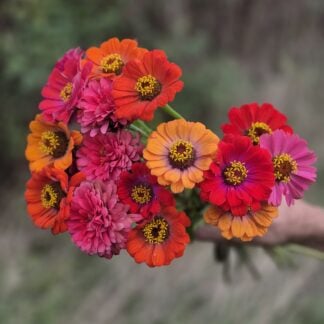
Beautiful bright multicoloured zinnia with long-lasting blooms. Large, single flowers in a punchy mix of red, orange, violet, pink and yellow tones, each with its own subtle variation. Best not sown too early – an easy, rewarding variety growing about 70cm tall and excellent choice for cut flower growers.
(Approximate seed count – 75)
Gruffuthii’s striking lime-green foliage makes it a favourite for adding contrast and interest in borders and bouquets. The euphorbia-like stems are an excellent addition to the cut flower garden with a long vase life. It produces useful foliage from July – October with delicate flower heads that provide a perfect backdrop to other brightly coloured blooms.
(Approximate seed count – 500)
A beautiful variety of Hollyhock with towering blooms and a deep plum – almost black – flowers. The classic cottage garden flower, Hollyhocks look fantastic at the back of a sunny border with stems up to 2m. It’s a short-lived perrenial and a great choice for pollinators and will self-seed readily.
(Approximate seed count – 50)
Beautiful delicate multicoloured blooms opening creamy green and progressing through pink to pale mauve. This Fred’s favourite sweet pea variety. The colour show when they are in full bloom is no less than spectacular. Each flower head is a rainbow of different colours, and the smell is intoxicating!
(Approximate seed count – 23)
A sweet pea relative used as a filler in flower arrangements, with delicate green foliage and small blue flowers. Azureus produces an abundance of delicate and elegant green foliage with feathery tendrils. The flowers are small and odourless, and while the stems are too small to be cut as individual stems, the buds on the cut branches will continue to flower for a week or more if placed in a vase of water.
Very easy to grow and can survive drought conditions.
(Approximate seed count – 23)
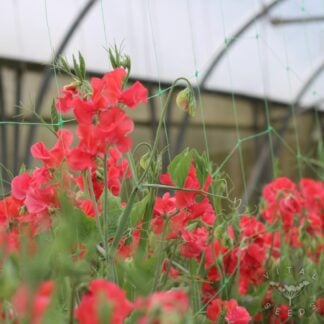
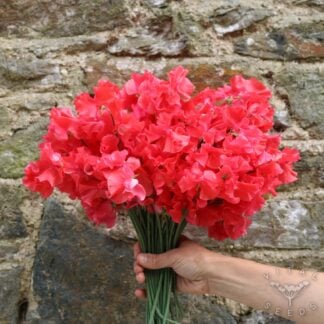
A long-stemmed sweet pea variety producing long-stemmed large blooms in a scarlet hue. Restormel’s blooms have a delicate scent and the plants have a long flowering season and a vigorous growing habit. Perfect for cutting with a vase life of up to 5 days.
(Approximate seed count – 23)
*** This year’s crop is currently being processed and tested – we hope to get everything ready for 1 November catalogue launch ***
A popular cut flower that’s long lasting and great for arranging and drying. Also known as Love-in-a-Mist, these hardy annuals take their name from the lovely delicate tendrils that surround each flower head. This variety has beautiful purple streaks lining each petal and is a great workhorse for the cut flower enthusiast, producing abundant flowers and seed pods great for arranging and drying.
(Approximate seed count – 150)
A quirky dwarf variety producing fluffy ultra-double blooms. This unique sunflower is named Teddy Bear due its very soft pompom like blooms with almost no smooth centre. The plants have a branching habit so will produce multiple flowering stems on each plant.
(Approximate seed count – 24)
Vanity is a slightly more compact variety, making it great for small gardens or containers. A perrenial flower that should be found in every cottage garden, not just for it’s beautiful tall stems and delicate movement but also it’s attraction to pollinators. This specific variety has been said to have petals in a slightly more vibrant hue and will flower from June – October.
(Approximate seed count – 50)
Pale blue mostly double flowers, sit atop a misty spray of delicate green foliage. A delightful sight in any garden or allotment and an excellent crop for attracting beneficial pollinators into your space. ‘Miss Jekylls’ captivating blooms are perfection in borders for cut flower arrangements and after the pods swell and dry the edible seeds can be harvested utilising the attractive seed head for dry flower crafts.
This delightful annual has stood the test of time amongst garden designers, its is after all named after one of the greatest female garden designers of the 19th century whose influence is still very much alive in modern garden design today.
(Approximate seed count – 200)
Tall spires of yellow green flowers, well known dye plant also great as cut flower. Weld aka Dyers’ Rocket is native to Europe and historically used as a dye plant for making a bright brilliant yellow. It may even be one of the oldest dye plants known about.
We enjoyed it as a cut flower too with unusually shaped tall slender spikes of tiny pretty yellow green flowers adding texture to any bouquet.
(Approximate seed count – 500)
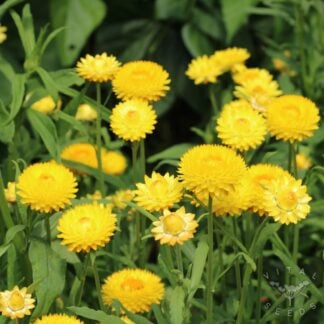
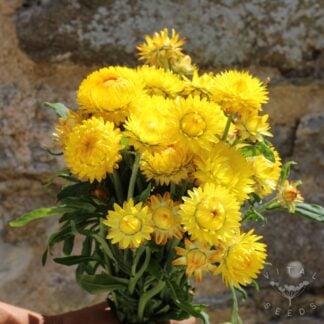
With vibrant sunshine yellow blooms for fresh and dried flower arrangements. Cheerful yellow colours of this everlasting favourite. The sturdy plants produce papery, daisy-like flowers on long stems, flowering generously through summer and into autumn.
These flowers are perfect for cutting and they keep their colour and shape beautifully when dried. Brings a lovely splash of golden yellow to borders, bouquets and dried flower arrangements.
(Approximate seed count – 200)
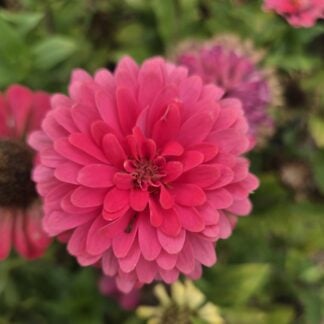
A staple flower for the garden, bright coloured blooms on straight stalks. This dwarf mix of Zinnias grow to around 30cm tall. They produce blooms of varying shades of pink, adored by bees and butterflies. We love to plant zinnias in among our vegetable crops. The dwarf varieties take up less space but are equally beautiful to their taller cousins.
(Approximate seed count – 100)
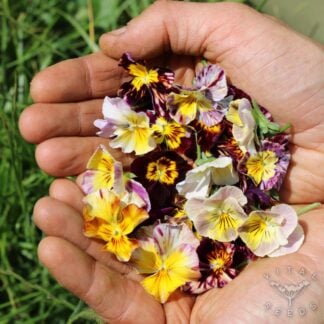
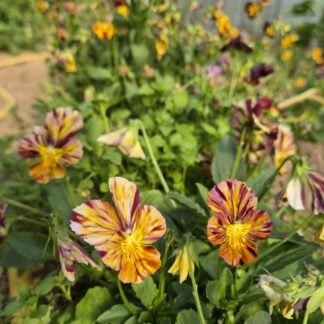
A truly stunning variety of viola producing multicoloured blooms of plum, apricot, sunny yellow and orange. ‘Brush Strokes’ was our top favourite in our viola trial in 2025, it really stood out as a winner with its diverse and vibrant colours. Each flower is like a work of art!
(Approximate seed count – 100)
Grow your very own superfood. Grown for its nutritious seeds, the plants have beautiful blue and purple flowers that are also attractive to pollinators. A member of the mint family, Chia can grow up to 5 feet tall and can be sown directly outside after the risk of frost has passed. Chia seeds are rich in dietary fibre and Omega 3 oils as well as being a great source of protein.
(Approximate seed count – 350)
Beautiful clover-like pink blooms on long stems, ideal for cutting fresh or drying. ‘Rose’ is a stunning variety of globe amaranth, producing an abundance of delicate flowers over a long harvest period.
The flowers are also edible and are used as a garnish or to make a tea from.
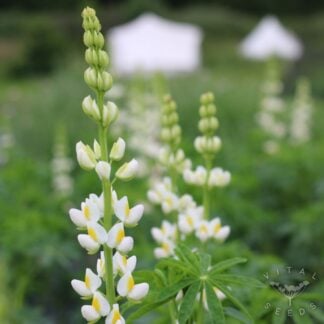
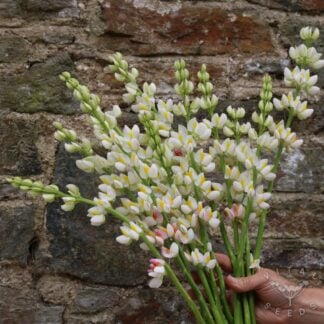
Beautiful and elegant spires with white florets and yellow throats. ‘Javelin White’ is a stunning lupin variety with a fragrance that is to die for. We love having its striking presence in our flower patch and the divine scent which wafts across the field is an added treat for the senses.
We harvested a bunch for a photograph and kept them in our office for a week and everyone that came through asked what the amazing smell was!
Pinch early and pick regularly for continuous blooms.
(Approximate seed count – 25)
A stunning snapdragon variety producing spikes of single petalled blooms in varying hues of pink, peach and white. This has been a real show stopper and we’ve taken great delight in the variety of delicate colour combinations it produces and its popularity with pollinators. Appleblossom produces abundant long stemmed blooms perfect for cutting or fits delightfully in a cottage garden border.
(Approximate seed count – 500)
A stunning version of the regular calendula with fully doubled blooms and of peach, gold and bronze petal colour. This calendula variety is a real treasure. Pastel shades of orange, pink and peach are tinged with yellow towards the petal base. The backs of the petals are maroon. A pure joy to look at. We were so excited to have found this strain of calendula, bred by Frank Morton from Wild Garden Seeds in Oregon, USA. The flowers don’t only look good in the garden or as cut flower, they are also edible and can be used for medicinal purposes, too. An abundance of beauty for your garden!
(Approximate seed count – 80)
A unique form of scabious bred for its delicate lantern-like seed heads. Sternkugel is the perfect choice for the dried flower enthusiast, producing beautiful pale blue pincushion flowes turning into decorative seed heads great for adding interest and sculpture to arrangements or bouquets.
(Approximate seed count – 30)
Also known as ‘Pot Marigold’. This is the classic calendula, producing abundant large orange blooms over a long season. We love calendula and would never go a season without it. It is really easy to grow and loved by humans and insects alike. There is something magical about finding bumblebees sleeping in calendula flowers early in the morning. The flowers are edible and make a great addition to salads. The petals have good medicinal properties and can be taken as an infusion in hot water or turned into a powerful tincture. Calendula’s medicinal actions include but are not limited to: anti-inflamatory, astringent, vulnery, and anti-microbial.
A long-stemmed sweet pea variety producing delicate blooms in a peach-blush. Castlewellan’s blooms are sweetly scented and the plants have a long flowering season and a vigorous growing habit. Perfect for cutting with a vase life of up to 5 days.
(Approximate seed count – 15)
One of the oldest and most popular sweet pea varieties with pink and white flowers and a fragrant scent. Painted Lady is bi-coloured and sweet scenting with delicate pink and creamy white flowers. It is one of the oldest sweet pea varieties and has been grown in England for centuries. It makes a great cut flower and is a delight for every garden.
A beautiful and highly productive sweet pea producing an abundance of delicate cream blooms. This is Ronja’s favourite sweet pea of 2023, producing a huge amount of incredible blooms, the performance was incredible and beautiful in its simplicity. The scent of the flowers wafting through the field in July brought a very special feeling to the patch and we were sad to see the blooms go. Luckily they were followed by lots of plump seed pods which we were equally excited about as now we can offer this variety to you!
(Approximate seed count – 23)
Eye-catching flowers with gentle fizzing tones of watermelon pink, white and apricot. These beauties are great as cut flowers or for filling borders with sumptous bursts of colour. this is a short lived hardy perennial often grown as a biennial here in the uk, flowering from June- August.
Best sown thinly under vermiculite or sand and watered from below as the seeds are very small, plant out as soon as 2 true leaves have formed, they do not like root disturbance so handle gently.
(Approximate seed count – 250)
Dark red almost black velvety blooms on long stems, a favourite in the flower garden.
We were absolutely taken by this elegant flower with dark crimson to burgundy colours, some really going into black with contrasting creamy white stamen. This scabious makes an amazing cut flower and keeps impressing throughout the summer months. Flower heads make way for lovely seed heads with the shape of pin cushions.
Can be used as a dye flower producing over green and blue to purple dyes depending on mordant and modifiers.
No dye garden would be complete without the addition of Coreopsis, otherwise known as Dyer’s Tickseed. With cheerful beautiful blooms of bright yellow and a ruby heart, Coreopsis flowers produce a beautiful warm orange natural dye. It’s also a beautiful addition to the garden border for it’s tall stem length, drought tolerance and long flowering window, producing masses of flowers from midsummer to autumn.
(Approximate seed count – 300)
Bright shades of blue flowers attractive to bees and other pollinators, great as cut flower as well. A flower that makes every garden happy. Cornflowers produce masses of stunning blue shaded blooms and attract bees and other insects as well. They were once native to European corn fields, but have mostly disappeared from the landscape due to large scale use of herbicides. Today they are mainly fond in gardens and allotments – we grow them in amongst our vegetables.
(Approximate seed count – 200)
A beautiful and deliciously fragrant lupin producing multicoloured blooms of azure blue, white and yellow. We are really wowed by this variety, and frequently stop just to admire it when we walk past it in the field.
The incredibly cheerfully coloured blooms are borne on strong stems making it ideal for cutting as well in the border.
(Approximate seed count – 25)
Visnaga is a robust version of Ammi, producing dense and delicate white flowers perfect for the cutting garden. Ammi Visnaga is hardy annual that produces an abundance of white frothy Angelica-like flowers with delicate green foliage. It can grow up to 120cm tall and is a fantastic addition to any ornamental garden or as a cut flower for bouquets or arrangements from June – September.
(Approximate seed count – 1000)
A variety of carrot bred for its white delicate umbels that turn pink once opened. Dara is a staple in any cut flower garden, producing abundant delicate stems that are often ready just as Ammi finishes. They are a fantastic variety for pollinators and attract a wide range of beetles, hover flies and bees. The seed heads are good for drying and it be autumn sown for early blooms in spring.
(Approximate seed count – 150)
An essential annual grass for cut flower growers, Briza Maxima adds delicate beauty to any arrangement or garden. This variety is also known as Greater Quaking Grass which describe its beautiful heart shaped heads that nod in the breeze and shine as they catch the light. Briza Maxima produces stems from June – August and is also great for drying, turning straw-coloured when dried.
(Approximate seed count – 200)
With delicate white flowers and easy to pair stems, this is a great addition to any cut flower garden. The beautiful lace-like umbels of Orlaya Grandiflora work well as great filler for early spring bouquets and the more you cut, the more blooms you will be rewarded with.
(Approximate seed count – 50)
A striking flake variety with maroon-grey speckles on a white background. Nimbus is a real show-stopper variety producing a mass of bicolour blooms on very long stems. The petal edges have a dark maroon strip and their scent is delicious. Definitely a must-have variety.
(Approximate seed count – 23)
White petals with contrasting dark maroon spidery centres borne on delicate green foliage. We totally love this variety and regularly had to stop and admire it as we walked past it in the field. It’s a really prolific producer of some of the most elegant blooms we have ever grown.
The flowers have a great vase life and develop into striking dark ornamental seed pods after the petals have dropped.
(Approximate seed count – 200)
Large double and semi-double creamy-yellow blooms with a contrasting dark centre disk. This is a wonderful new addition to our catalogue for 2024, we have totally fallen in love with this variety. The delicate and contrasting colours make it a superb addition to the garden and it looks wonderful in bouquets.
Its long stem length compared to other calendulas we’ve grown make it particularly suitable as a cut flower.
(Approximate seed count – 100)
A showstopping variety with incredible peach and apricot coloured blooms that look like they’ve been taken straight from a painting. It flowers over a very long season, especially if picked or dead-headed. California poppies are drought tolerant so very low maintenance.
(Approximate seed count – 100)
A bright yellow/orange single flower of the Papaveracea (Poppy) family. It’s Latin name Escholzia Californica traces back to the physician Dr Johann Friedrich Eschscholz, who discovered and described the plant in 1815. Not only having its origins there, it also also became the state flower of California in 1890. It is quick to flower and will do so profusely for a long period of the summer until it sets seed. A real pleasure to have in the garden, especially in low-maintenance areas as it will just get on with doing its thing.
(Approximate seed count – 150)
A stunning and unique variety producing mainly double flowers of creamy rose and cranberry. This is a new variety for us and we really love it. It’s a real show stopper. It flowers over a very long season, especially if picked or dead-headed. California poppies are drought tolerant so very low maintenance.
If using as a cut flower it acts as both filler and thriller due to its delicate lacy foliage.
(Approximate seed count – 100)
A quirky variety producing very dark maroon double blooms. The flowers are so dark they are almost black and have a very dramatic appearance. They make a great cut flower, as well as looking fantastic in the garden. As with all cornflowers, they are edible too.
(Approximate seed count – 130)
A popular cut flower that’s long-lasting and great for arranging and drying. Also known as Love in a Mist, these hardy annuals take their name from the lovely delicate tendrils that surround each flower head. This variety has beautiful pink petals and is a great workhorse for the cut flower enthusiast, producing abundant flowers and seed pods great for arranging and drying.
(Approximate seed count – 200)
Pale blue, pink and white flowers on upright, bushy plants with feathery foliage. Nigella flowers or ‘love-in-a-mist’ are a popular and traditional cottage garden flower. The blue, pink and white solitary flowers appear to sit on a bed of ‘misty’ foliage, hence the common name. The plants get about 50cm high and the blossom is followed by a decorative, inflated seed capsule that also makes a nice addition to cut flower arrangements.
(Approximate seed count – 200)
A wonderful variety of Iceland Poppy with a profusion of bright red flowers all summer. With strong upright stems, this is a great variety for cutting and will produce flowers from the first year of sowing.
(Approximate seed count – 250)
A delightful poppy with ruffled blooms in a spectrum of soft pastels from white to grey, orange and pink. This variety offers a charming mix of single and double flowers that add a cheerful touch to the garden and vase alike with colours ranging from creamy white and blush pink to smoky lavender and warm orange. With its delicate and fleeting beauty and long flowering period, Angels Choir is a stunning addition to any space. Self-seeds easily and loved by pollinators.
(Approximate seed count – 500)
An old variety with delicate purple silky flowers and large seed pods. This variety was traditionally grown for it’s delicious and nutritious seeds, often used in baking.
However it’s a true multipurpose crop producing beautiful flowers and dried seed heads which make a striking addition to flower arrangements.
(Approximate seed count – 500)
A unique variety producing stunning blooms in mauves, pinks, maroons and violets that are highlighted by delicate, feathery foliage. Classic Magic is a prolific bloomer that is easy to grow and maintain, making it a popular choice among gardeners of all skill levels. Edible petals make an attractive decoration to cakes and as garnishes. Whether you’re growing for a visual treat or a culinary one, this variety is a total show-stopper!
(Approximate seed count – 150)
Delicate white double flowers sit atop a misty spray of delicate green foliage. Cramers Plum is a great variety in the cutting garden, producing abundant blooms and deep plum coloured seed pods that are fantastic for arranging and that keep their colour when dried.
(Approximate seed count – 200)
Cheerful red flowers announcing the summer, great for pollinating insects. The classic field poppies are a favourite in gardens and fields in almost every part of the world. Single, cup-shaped flowers with brilliant red petals resembling crepe paper, poppy blossoms never disappoint! Low maintenance and fast flowering, they re-seed easily and come back year after year.
Flowering from June through to September, they’re great in a meadow or wildflower garden. Plant them anywhere you want a bright splash of colour that will attract bees and other pollinating flowers.
(Approximate seed count – 1350)
Popular filler for flower arrangements with lacy flower heads.
This tall, branching plant with crisp white flower heads and finely feathered foliage provide invaluable additions to late spring and early summer bouquets. Ammi majus is one of the most useful and productive filler flowers you can grow from seed. Air dry flowers for two to three weeks in a dark, dry place for making dried flowers. Darkness is necessary to keep the flowers white.
A lovely scabious variety producing large salmon-pink heads. An easy to grow garden favourite, it’s also a great variety for cutting, producing an abudance of double-petalled blooms on tall, upright stems throughout the summer. It’s also great for pollinators, especially butterflies, making it a fantastic choice for any ornamental garden too.
(Approximate seed count – 50)
A beautiful variety producing pale creamy apricot and yellow blooms. What a stunner! We love this variety and it’s extremely productive too. It makes a fantastic cut flower as well as a wonderful addition to the border.
Expect a vase life of up to 7-10 days if picked when the buds are just bursting open.
(Approximate seed count – 50)
A riot of spectacular white fluffy orbs followed by large decorative seed pods. This is a really unique variety of breadseed poppy, we were stunned by the dramatic explosion of blooms when their buds burst open. The flowers are as spectacular as they are short lived! Luckily the beautiful seed pods that follow will last indefinitely as a dried decoration.
(Approximate seed count – 500)
A beautiful mixed variety producing blooms of various dusty shades of plum, pink and white. This is a really eye catching variety, with such delicate colour shades. Some white with raspberry veining, some dusty pink, pale plum and white, on long elegant stems.
Vase life 3-4 days – seer stem ends for 10 seconds.
Mesmerising poppies with semi-doubled petals textured like vintage silk in stylish tones of stormy grey, delicate mauve and silvery white. These charismatic poppies float gracefully upon delicate stems providing a dreamy romantic atmosphere to your borders with a profusion of successional flowers. Whilst each flower is short lived, the statuesque seed pods can be admired long after the petals have scattered like confetti.
(Approximate seed count – 500)
A variety bred specifically for its large decorative seed pods perfect for the floral arranger. Giganteum is a staple in any cut flower garden, producing an abundance of enormous seed heads perfect for drying or arranging. While not long lived, the flowers also add a splash of vibrant pink to the garden border, blooming all summer long.
(Approximate seed count – 500)
Rich dark purple flowers with spidery seed pods. This is a striking variety of nigella ideal for florestry due to its deep colours and quirky seed pods, which can be used both fresh and dried.
(Approximate seed count – 250)
Beautiful delicate multicoloured blooms opening creamy green and progressing through pink to pale mauve. This Fred’s favourite sweet pea variety. The colour show when they are in full bloom is no less than spectacular. Each flower head is a rainbow of different colours, and the smell is intoxicating!
(Approximate seed count – 23)
A sweet pea relative used as a filler in flower arrangements, with delicate green foliage and small blue flowers. Azureus produces an abundance of delicate and elegant green foliage with feathery tendrils. The flowers are small and odourless, and while the stems are too small to be cut as individual stems, the buds on the cut branches will continue to flower for a week or more if placed in a vase of water.
Very easy to grow and can survive drought conditions.
(Approximate seed count – 23)
A long-stemmed sweet pea variety producing long-stemmed large blooms in a scarlet hue. Restormel’s blooms have a delicate scent and the plants have a long flowering season and a vigorous growing habit. Perfect for cutting with a vase life of up to 5 days.
(Approximate seed count – 23)
*** This year’s crop is currently being processed and tested – we hope to get everything ready for 1 November catalogue launch ***
A popular cut flower that’s long lasting and great for arranging and drying. Also known as Love-in-a-Mist, these hardy annuals take their name from the lovely delicate tendrils that surround each flower head. This variety has beautiful purple streaks lining each petal and is a great workhorse for the cut flower enthusiast, producing abundant flowers and seed pods great for arranging and drying.
(Approximate seed count – 150)
An unusual poppy predominantly grown for its decorative seed heads. This ancient variety is named ‘Hens and Chickens’ due to the interesting formation of the seed head where the main head is surrounded by many tiny secondary seed heads, like a mother chicken surrounded by her gaggle of tiny chicks.
The blooms before the seed heads form are of a redish pink colour and are equally as attractive as the heads. The seeds can also be eaten, so this is a true multifunctional variety.
Pale blue mostly double flowers, sit atop a misty spray of delicate green foliage. A delightful sight in any garden or allotment and an excellent crop for attracting beneficial pollinators into your space. ‘Miss Jekylls’ captivating blooms are perfection in borders for cut flower arrangements and after the pods swell and dry the edible seeds can be harvested utilising the attractive seed head for dry flower crafts.
This delightful annual has stood the test of time amongst garden designers, its is after all named after one of the greatest female garden designers of the 19th century whose influence is still very much alive in modern garden design today.
(Approximate seed count – 200)
Beautiful and elegant spires with white florets and yellow throats. ‘Javelin White’ is a stunning lupin variety with a fragrance that is to die for. We love having its striking presence in our flower patch and the divine scent which wafts across the field is an added treat for the senses.
We harvested a bunch for a photograph and kept them in our office for a week and everyone that came through asked what the amazing smell was!
Pinch early and pick regularly for continuous blooms.
(Approximate seed count – 25)
A truly stunning variety of viola producing multicoloured blooms of plum, apricot, sunny yellow and orange. ‘Brush Strokes’ was our top favourite in our viola trial in 2025, it really stood out as a winner with its diverse and vibrant colours. Each flower is like a work of art!
(Approximate seed count – 100)
A unique form of scabious bred for its delicate lantern-like seed heads. Sternkugel is the perfect choice for the dried flower enthusiast, producing beautiful pale blue pincushion flowes turning into decorative seed heads great for adding interest and sculpture to arrangements or bouquets.
(Approximate seed count – 30)
An ever popular cut flower great for drying, adding unusual colourful stems perfect for arranging . With bright yellow globes on upright stalks, this variety is a must for the dried flower enthusiast. It can be treated as a perennial with extra protection over winter, resulting in larger and more abundant blooms in the second year.
(Approximate seed count – 100)
A tall variety producing an abundance of multi-coloured blooms. This is a wonderful and vibrant helichrysum mix, whose bright blooms look like delicious boiled sweets!
The blooms lend themselves to both fresh and dried flower arrangements so are a great all-rounder.
(Approximate seed count – 200)
A beautiful variety producing blooms of peach, salmon and pale orange. This is probably our favourite variety of helichrysum, its subtle and delicate tones look stunning in a bouquet or vase. The cut stems can be hung up and dried for use in winter flower arrangements or just left hanging as decoration.
(Approximate seed count – 200)
A delightful everlasting flower, with delicate daisy-like flowers on tall, branching stems. Bearing flowers all summer long, from June – September, this variety is an excellent addition to a cutting garden and dries beautifully for winter arrangements.
(Approximate seed count – 500)
White petals with contrasting dark maroon spidery centres borne on delicate green foliage. We totally love this variety and regularly had to stop and admire it as we walked past it in the field. It’s a really prolific producer of some of the most elegant blooms we have ever grown.
The flowers have a great vase life and develop into striking dark ornamental seed pods after the petals have dropped.
(Approximate seed count – 200)
*** This year’s crop is currently being processed and tested – we hope to get everything ready for 1 November catalogue launch ***
A cutting garden staple that produces beautiful ornamental grass heads that resemble soft bunny tails. Bunny Tail Grass is a clump forming variety, producing an abundance of delicate stems from July – September. It’s also a great variety for drying, turning straw-coloured when dried and keeping its softness.
(Approximate seed count – 300)
A popular cut flower that’s long-lasting and great for arranging and drying. Also known as Love in a Mist, these hardy annuals take their name from the lovely delicate tendrils that surround each flower head. This variety has beautiful pink petals and is a great workhorse for the cut flower enthusiast, producing abundant flowers and seed pods great for arranging and drying.
(Approximate seed count – 200)
Most beautiful tones of silvery blush pink and cream colours, great for fresh and dried bouquets. What a delight having these plumes growing in the garden. Very elegant as a cut flower and it goes in almost any bouquet with their silvery cream, warm pink and peachy palette against dark green foliage.
Celosia keeps its colours when dried. This variety lives up to its name when hung and dry, the colours fade ever so slightly and get even more of a vintage feel to them.
(Approximate seed count – 100)
Pale blue, pink and white flowers on upright, bushy plants with feathery foliage. Nigella flowers or ‘love-in-a-mist’ are a popular and traditional cottage garden flower. The blue, pink and white solitary flowers appear to sit on a bed of ‘misty’ foliage, hence the common name. The plants get about 50cm high and the blossom is followed by a decorative, inflated seed capsule that also makes a nice addition to cut flower arrangements.
(Approximate seed count – 200)
A highly versatile and textured filler in any cut flower arrangement when left to go to seed. It’s not just a sandwich filler! With an upright habit and plumes of dainty intricate stems and a long vase life, it makes the perfect addition to the cutting garden. It’s easy to grow and also works wonderfully as a dried flower, turning golden in colour as autumn approaches
(Approximate seed count – 200)
An etheral, airy grass that adds structure and drama to any garden and arrangement. This is a fantastic variety for any cut flower enthusiast, producing abundant long stems and bonfire-like spray of delicate grass heads
(Approximate seed count – 200)
Delicate white double flowers sit atop a misty spray of delicate green foliage. Cramers Plum is a great variety in the cutting garden, producing abundant blooms and deep plum coloured seed pods that are fantastic for arranging and that keep their colour when dried.
(Approximate seed count – 200)
Popular filler for flower arrangements with lacy flower heads.
This tall, branching plant with crisp white flower heads and finely feathered foliage provide invaluable additions to late spring and early summer bouquets. Ammi majus is one of the most useful and productive filler flowers you can grow from seed. Air dry flowers for two to three weeks in a dark, dry place for making dried flowers. Darkness is necessary to keep the flowers white.
A dried flower enthusiast’s favourite in a gorgeous vibrant hue. Known for its delicate, papery flowers, this variety is a must have for any flower arrangement with tall stems that are long lasting and keep their vibrant colour once dried. They are also an excellent addition to the garden border, adding beautiful contrast and structure. They are a fantastic choice for pollinators are easy to grow and drought-tolerant.
(Approximate seed count – 200)
Delicate papery blooms of pink through to white, equally at home in the border, the vase, or as a dried bunch. This is a new variety for us and we totally love it! The pale blush pink petals are borne on good strong stems, and if flowers are either cut or deadheaded the plants will keep producing over a very long period.
A top favourite for wedding bouquets due to the exquisite delicate and unfolding nature of the blooms.
(Approximate seed count – 200)
A beautiful variety producing white flower spikes with striking pink tips. We love this variety for its feathery plumes which make a great cut flower for bouquets. Bunches can also be hung and dried upside down as everlasting flowers for winter decoration.
A beautiful mix of white, pink orange and yellow flowers on plants 40cm tall. Strawflowers (also known as ‘everlasting flowers’) are a beautiful addition to the garden. They are perfectly suited for drying, just cut the stem before they are fully open and hang in bunches upside down in a dry place out of direct sunlight. They are also great as a fresh flower for use in bouquets. We love the bright colours in this mix, they remind us of colourful boiled sweets!
(Approximate seed count – 200)
A wonderful variety of Achillea with tall, upright stems and large sunshine yellow umbels. This vigorous perennial is a fantastic addition to the garden, giving abundant blooms throughout summer and adding drama to the back of a border. This variety also works brilliantly as a cut flower with exceptional stem length.
(Approximate seed count – 350)
Rich dark purple flowers with spidery seed pods. This is a striking variety of nigella ideal for florestry due to its deep colours and quirky seed pods, which can be used both fresh and dried.
(Approximate seed count – 250)
*** This year’s crop is currently being processed and tested – we hope to get everything ready for 1 November catalogue launch ***
A popular cut flower that’s long lasting and great for arranging and drying. Also known as Love-in-a-Mist, these hardy annuals take their name from the lovely delicate tendrils that surround each flower head. This variety has beautiful purple streaks lining each petal and is a great workhorse for the cut flower enthusiast, producing abundant flowers and seed pods great for arranging and drying.
(Approximate seed count – 150)
An unusual poppy predominantly grown for its decorative seed heads. This ancient variety is named ‘Hens and Chickens’ due to the interesting formation of the seed head where the main head is surrounded by many tiny secondary seed heads, like a mother chicken surrounded by her gaggle of tiny chicks.
The blooms before the seed heads form are of a redish pink colour and are equally as attractive as the heads. The seeds can also be eaten, so this is a true multifunctional variety.
Vanity is a slightly more compact variety, making it great for small gardens or containers. A perrenial flower that should be found in every cottage garden, not just for it’s beautiful tall stems and delicate movement but also it’s attraction to pollinators. This specific variety has been said to have petals in a slightly more vibrant hue and will flower from June – October.
(Approximate seed count – 50)
Pale blue mostly double flowers, sit atop a misty spray of delicate green foliage. A delightful sight in any garden or allotment and an excellent crop for attracting beneficial pollinators into your space. ‘Miss Jekylls’ captivating blooms are perfection in borders for cut flower arrangements and after the pods swell and dry the edible seeds can be harvested utilising the attractive seed head for dry flower crafts.
This delightful annual has stood the test of time amongst garden designers, its is after all named after one of the greatest female garden designers of the 19th century whose influence is still very much alive in modern garden design today.
(Approximate seed count – 200)
An exotic and beautiful variety of Celosia, producing large coral-like apricot plumes on a triangular green base . A great addition to any cut flower garden, adding drama and interest to any dried or fresh arrangements.
With vibrant sunshine yellow blooms for fresh and dried flower arrangements. Cheerful yellow colours of this everlasting favourite. The sturdy plants produce papery, daisy-like flowers on long stems, flowering generously through summer and into autumn.
These flowers are perfect for cutting and they keep their colour and shape beautifully when dried. Brings a lovely splash of golden yellow to borders, bouquets and dried flower arrangements.
(Approximate seed count – 200)
Beautiful clover-like pink blooms on long stems, ideal for cutting fresh or drying. ‘Rose’ is a stunning variety of globe amaranth, producing an abundance of delicate flowers over a long harvest period.
The flowers are also edible and are used as a garnish or to make a tea from.
A familiar annual plant with daisy like flowers, which will self seed in situ to grow again the next year. Beautiful white daisy like flowers, around 60cm tall ,with a long history of medicinal use as a safe and gentle herb. Well recognised as a calming tea.
(Approximate seed count – 1000)
A stunning version of the regular calendula with fully doubled blooms and of peach, gold and bronze petal colour. This calendula variety is a real treasure. Pastel shades of orange, pink and peach are tinged with yellow towards the petal base. The backs of the petals are maroon. A pure joy to look at. We were so excited to have found this strain of calendula, bred by Frank Morton from Wild Garden Seeds in Oregon, USA. The flowers don’t only look good in the garden or as cut flower, they are also edible and can be used for medicinal purposes, too. An abundance of beauty for your garden!
(Approximate seed count – 80)
Also known as ‘Pot Marigold’. This is the classic calendula, producing abundant large orange blooms over a long season. We love calendula and would never go a season without it. It is really easy to grow and loved by humans and insects alike. There is something magical about finding bumblebees sleeping in calendula flowers early in the morning. The flowers are edible and make a great addition to salads. The petals have good medicinal properties and can be taken as an infusion in hot water or turned into a powerful tincture. Calendula’s medicinal actions include but are not limited to: anti-inflamatory, astringent, vulnery, and anti-microbial.
A herbaceous perennial plant with stunning pink/ purple flowers late into the Autumn. Echinacea is one of the more well-known and studied medicinal plants, and because of overharvesting of wild populations has now become rare in the wild. The flowers are also beautiful in the garden and lovely as a cut flower. It grows easily in this climate, although prefers a well-drained spot as the roots can get damaged in wet winters. The new spring growth is also very attractive to slugs and may need some additional protection.
(Approximate seed count – 30)
Herbaceous perennial plant with spires of lilac/ purple flowers that are hugely attractive to wildlife. Korean mint grows up to 1m tall with flowers that are particularly interesting to hoverflies and bumblebees. It is one of the core 50 herbs in Chinese medicine, and makes a delicious tea which has a minty liquorice flavour. Once established the plants will expand gradually in a clump, which can be divided every few years.
(Approximate seed count – 250)
A breath-taking rainbow of pastel shades including buttercream, peach, coral, blush and raspberry. This is a truly stunning yarrow mix and such a joy to grow. Predominantly gentle shades punctuated by the occasional magenta shock.
Ideal for cutting due to their very long stems and vase life of up to 7 days.
(Approximate seed count – 350)
Herbaceous wildflower with creamy white “frothy” flowers known for its medicinal properties.
Meadowsweet is a hardy perennial plant and medicinal herb with highly aromatic flowers in early to mid summer. Known for being a flavour in traditional mead as well as being the origin of salicylic acid, the active ingredient in aspirin, meadowsweet is usually indicated in digestive conditions. The plants grow to around 1.2m tall in the sun and with a moist to average soil.
(Approximate seed count – 50)
Popular medicinal herb with delicate lemon fragrance.
Fresh leaves of Lemon Balm make a delicious tea, or can be used fresh in salads. The herb has a long history as a medicinal plant for the nervous system and as mood up-lifting. A robust plant well suited for the British climate and easy to grow.
A striking biennial, Mullein is a tall, architectural plant with soft, silvery leaves and towering spikes of bright yellow flowers in its second year, growing 1 to 2m tall. It is a fantastic addition to wildlife gardens, attracting bees, butterflies, and other pollinators. Mullein thrives in poor, well-drained soils and is highly drought-tolerant. Historically used in herbal medicine for respiratory support.
(Approximate seed count – 150)
Large double and semi-double creamy-yellow blooms with a contrasting dark centre disk. This is a wonderful new addition to our catalogue for 2024, we have totally fallen in love with this variety. The delicate and contrasting colours make it a superb addition to the garden and it looks wonderful in bouquets.
Its long stem length compared to other calendulas we’ve grown make it particularly suitable as a cut flower.
(Approximate seed count – 100)
Important herb from the Ayurvedic tradition with great health benefits.
A tender plant which grows in temperate climates as an annual. Ashwagandha is a well regarded medicinal herb from the Ayurvedic tradition. It is now widely used in Western herbal medicine as “adaptogen” and to support the body’s defences and resilience. It will grow undercover in a greenhouse, polytunnel or large pot in a conservatory. Roots can be harvested at the end of the season. Grows 80 – 120cm tall.
Herbaceous perennial with bright yellow flowers from midsummer. St Johns wort has well researched medicinal properties, and a long history as a medicinal plant. It grows happily in a meadow or in a bed and gets 30-60cm tall. It self-seeds easily and spreads around. This is not a issue in the UK as it is a native wildflower.
(Approximate seed count – 300)
Herbaceous soft-prickly perennial plant highly valued in herbal medicine
A striking plant with traditional and current uses in herbal medicine for the heart (hence the species name cardiaca), and in women’s health.
Will grow 60 – 120 cm tall; blooms between July and September. You will find soft pale pink flowers surrounded by prickly spikes on their stems. Harvest the aerial parts when they start to flower. Prefers well drained soil, and sun or part shade.
(Approximate seed count – 80)
Semi-evergreen perennial, with aromatic leaves and flowers. Hyssop has traditional medicinal uses, particularly related to the respiratory system, and is also a great plant for pollinators. This is the traditional blue hyssop, which has beautiful bright blue flowers from summer to early autumn, up to around 80cm tall. It likes similar conditions to Rosemary and Thyme, so sunny and well drained.
(Approximate seed count – 300)
A herb with lovely lilac flowers and spiky leaves grown as ornamental and medicinal plant.
Blue Vervein is an elegant hardy herbaceous perennial, native to North America, but widely grown around the world. It has particular properties for the nervous system and can help to ease tension. The plant has delicate foliage with a purple hue, and striking spires of dainty deep purple flowers. The plants grow 1m-1.5m tall and prefer moist soil in full to partial sun.
A hardy, low-growing perennial traditionally used as medicinal herb. Self-Heal is a valuable addition to wildflower meadows, pollinator gardens, and herbal plantings. Producing charming purple-blue flower spikes from late spring to early autumn, it attracts bees and butterflies while providing ground cover with its spreading habit.
Thriving in a variety of conditions, from grasslands to garden borders, it prefers well-drained soil and full sun to partial shade. Traditionally known for its medicinal uses, Self-Heal is both ornamental and beneficial. Easy to grow and drought-tolerant once established, it reaches a height of 6-12 inches. Perfect for naturalised plantings and wildlife-friendly spaces.
A lovely hardy biennial wildflower and herb with lance-shaped leaves and yellow flowers that open in the evening. Loved by bees, butterflies, and moths. The nutrient-rich seeds, which contain gamma-linolenic acid (GLA), are used medicinally, and the leaves and flowers are also edible.
Evening primrose thrives in full sun in poor, well-drained soils and needs little maintenance once established. As a biennial it will create a rosette of leaves in the first year, and flower in the second year, but self-seeds readily, so will usually appear year on year once established.
Tall growing perennial herb known for its medicinal properties.
It is an impressive herbacious perennial plant, with a bitter aromatic root that has a long history and current practice of medicinal use, specifically for the lungs. Elecampane was sacred to the Celts and has rich history in folklore, it also goes by the name “elfwort” since apparently it can be used to heal ‘elf-shot’ (condition caused from being shot by an elf’s arrow).
The plant is tall, up to 2m, although will take a couple of years to reach this stature. It has large yellow sunflower-like flowers with narrow petals and beautiful soft leaves.(Approximate seed count – 30)
A distinctive hardy perennial plant, with a long history of medicinal use around the world. It is also an ingredient in biodynamic compost preparations, and the beautiful white flowers are lovely as a cut flower which are also very attractive to pollinators.
This is the wild white flowered variety with occasional hints of pink. Other common names include ‘Nosebleed’, and ‘Carpenter’s Weed’ reflecting its traditional use in wound healing. Yarrow has a remarkable ability to grow happily in a mown lawn, meadow or garden beds. It can be mown and remain low, but may grow up to 60 – 90cm tall in the right conditions
(Approximate seed count – 1000)
A culinary herb from Japan, Shiso produces deep purple leaves with serrated patterning and an aromatic taste profile of cumin, cinnamon and anise. Shiso can be used as both a garnish and as a colourful and flavoursome addition to your salad mix or stir fries. It’s also traditionally used in pickling, including umeboshi, the Japanese sour plum pickle and tinges everything a plum purple.
(Approximate seed count – 200)
Herbaceous perennial with delicate bright blue flowers.
Blue Skullcap has a long history as Native American medicinal plant, as well as a wide current use in Western herbal medicine for the nervous system. It will grow in damper areas, but also thrives in a normal garden bed. It will grow 60-80cm tall.
Feverfew is a bushy short-lived hardy perennial with daisy-like flowers and serrated aromatic leaves, growing 60 to 80cm tall. It has traditional medicinal uses for migraine and headaches.
Feverfew is easy to grow and thrives in full sun to part shade, in well drained soil. It is great for pollinators and other beneficial insects too.
Herbaceous perennial with beautiful soft leaves and white flowers with pink tinges on tall spires. The roots have traditional medicinal properties as a demulcent, and when boiled up form a soft mucilage, which is the basis of what we now know as marshmallows. Marshmallow will grow in damper areas, but will also thrive in a normal garden bed. It will grow 90-120cm tall.
(Approximate seed count – 100)
This charming meadow wildflower is a hardy perennial distinctive for its spikes of golden-yellow five-petalled flowers that bloom throughout summer, growing between 50-150cm tall. The flowers are a valuable food source for bees and other pollinators. It is traditionally used in herbal medicine.
The classic spring onion. Long white stems with bright green tops, suitable for both spring/summer cultivation as well as over-wintering. This is traditionally the most popular variety of spring onion, and an essential addition to the veg patch. Quick, hardy and easy to grow. Its speed of growth makes it ideal for catch-cropping and year-round cultivation, with its small size meaning it can be easily squeezed into unused corners of the garden.
Spring onions are an extremely versatile culinary ingredient. Delicious both cooked and raw, they are a staple of our diet!
(Approximate seed count – 300)
A beautiful chard mix of red, pink, orange, yellow and white stalks with contrasting green and maroon leaves. Harvested as baby leaf in less than 6 weeks. Both the tender leaves and stalks are easy to fry, steam, blanch or add to an omelette. This variety of chard is less hardy and doesn’t handle frost as well, so best not relied on as your only winter green.
(Approximate seed count – 130)
A striking variety of mizuna with lime green leaves and purple stems. This beautiful new mizuna variety is apparently taking the Japanese foody-scene by storm! It’s similar in taste to green mizuna and is delicious raw in salads or cooked in stir-fries.
With its contrasting colour scheme it’s a real head-turner and is certain to impress.
An invaluable hardy winter salad for growing outdoors and under cover with a superb nutty flavour. Corn salad or lamb’s lettuce is a small annual plant that forms rosettes of dark green leaves which have a gentle nutty flavour, soft texture, and are extremely popular as salad greens. It provides a valuable source of fresh greens during the autumn and winter months as it is suitable for growing outdoors with little protection or under cover in the cold.
We are amazed by this plant’s hardiness and really enjoy growing it! Ronja grew up eating ‘Feldsalat’ (German for corn salad) almost every day during the winter months and wouldn’t want to live without it.
A refreshing herb typically used in South Asian and South American cooking. This high-yielding variety is excellent for flavouring curries, stews, rice dishes and as a garnish for soup and in salsa. All parts of the soft, light stems and leaves can be used. The flowers grow in pretty umbels, and if left to seed, the small seed heads can be used fresh or dried and used in cooking for added flavour and texture.
(Approximate seed count – 300)
A winter variety with large, savoyed, pointy leaves especially selected for winter hardiness. This productive spinach is particularly recommended for autumn and winter cultivation. The dark green characteristically pointy leaves are very aromatic and perfect eaten raw in salads, or delicious cooked.
(Approximate seed count – 500)
A must-have excellent winter leaf of mild flavour and incredibly succulent, soft and juicy texture.. Winter purslane, also known as miners lettuce or claytonia, has heart-shaped elegant looking leaves which are small, abundant and make a great cut-and-come-again salad green. You will get a productive harvest all winter and early spring and if left to self seed, it will just keep coming back year after year.
It is one of those greens that come up in just the right moment when we’re most in need of something fresh and it self-manages very well which is why we like it too.
(Approximate seed count – 850)
Upright plants producing lots of heavily savoyed dark green leaves. Surely this is the king of kales! We always grow masses of Nero di Toscana, we cant get enough of it. It has been a staple of Italian cuisine for centuries and heavily features in the iconic ‘Ribollita’ Tuscan bean stew.
Although usually steamed or stir-fried, kale leaves can also be massaged raw with a little olive oil, salt and lemon juice and made into a salad. Well worth a try if you haven’t already!
(Approximate seed count – 150)
Salad leaf with a peppery fresh taste, most commonly used raw but can be cooked, too. The nutritious dark green serrated leaves add their fine spice to salads, pasta, pizza, pesto, other sauces or as garnish. Salad rocket is native to the Mediterranean and has a long history of popularity. It is quick to crop and easy to grow and definitely one of our favourite salad leaves.
(Approximate seed count – 900)
Reliable medium-early variety for autumn, spring and winter cultivation. Robust, flavoursome and productive. Matador is ‘the’ tried and tested variety for your garden with large and tender leaves, bolt- and frost-hardy. It was Ronja’s first spinach trial in her mum’s raised beds that was a huge success. In spring when the spinach bolts and produces seed, you can easily save it and sow it again for your next crop.
(Approximate seed count – 460)
A classic French variety with very tasty long white roots. Tender and True is one of the best tasting parsnips you will find. If left in the ground until after the first frosts, the starch will turn into sugars and make this parsnip even sweeter.
The shoots and leaves of parsnip must be handled with care, as its sap contains furanocoumarins, chemicals that can cause burns on the skin when exposed to sunlight.
A variety with thick heavy stems – harvested from January onwards. This is a leek of outstanding flavour which will sit even through the bleakest of winter weather, providing you with a delicious ingredient to add to your wholesome winter stews and soups. Eating large amounts of leeks is one of the things that makes the winter months bearable and we are always sad when they come to an end in spring.
(Approximate seed count – 300)
A flat white turnip with purple shoulders; it’s easy to grow, quick to mature and excellent fresh or for storage. A classic Italian heritage variety from Milan with a creamy white, firm, crunchy and mildly sweet flesh. Eaten pickled, cooked or raw – it is a very versatile vegetable! The leaves are tasty and nutritious and can be cooked just like other greens.
A fantastic and versatile heritage cauliflower suited for all growing seasons. Snowball cauliflower was bred in the 1890s in America, and it has certainly stood the test of time. It produces heads of up to 15cm diameter ready 65-70 days from sowing. It has a mild flavour perfect for cooking but also delicious raw.
The plants are smaller than some cauliflowers and so can be planted closer together. We particularly love this variety due to its flexibility.
(Approximate seed count – 200)
An abundant, colourful, delicate variety of mustard which gets punchier as the season continues. Purple Frills has beautiful burgundy tinged, spidery leaves. It adds interest to any salad with its hot mustardy flavour. It can also be cooked and used a spicy spinach alternative. It is abundant in its growth and will continue throughout the coldest weather.
(Approximate seed count – 250)
An excellent, reliable variety, steadily producing from November up until the end of January. Groninger is a great-tasting Brussel sprout variety, with improving flavour as the cold draws in. It is an ideal choice for your garden, giving a steady supply of small to medium sized sprouts with tight heads just in time for Christmas dinner.
This variety has received the RHS Award of Garden Merit and is tried and tested, sturdy and reliable.
(Approximate seed count – 100)
Cavolo Nero-type kale of dazzling blue and green coloured leaves with exceptional pink midribs. This showy kale was bred by Hank Keogh from Avoca Farm in Oregon, USA. He back-crossed ‘Lacinato rainbow’ with the Wild Garden Seed ‘Lacinato’. In looks it resembles a Cavolo Nero kale and it has stunning blue, green and pink colours. The leaves are savoyed and have underturned margins, the plant grows upright and is very cold-hardy – more so than any other Cavolo Nero type kales. Tender and tasty, great for sautéing, steaming or finely chopped in a salad. A solid vegetable for the home or market garden.
A real treat in the garden, Piracicaba is a sweet, flavourful broccoli that’s perfect for picking over a long period. The initial central head is relatively small, however it produces an abundance of loose florets with large beads on long, tender stems which make it ideal for regular harvesting. Thriving in warmer conditions where other broccolis might struggle, it’s a brilliant choice for extending your season. We grew it in 2024 and absolutely loved it, it was one of those crops we were always happy to see more of.
(Approximate seed count – 150)
Early summer leek. Delicious and uniform with long white stems. Pandora is a quick maturing summer leek that can be harvested from late summer onwards. It’s delicious and uniform and makes long tender white stems and a dark blue-green foliage.
You shouldn’t really be eating leeks in August, but if you sow Pandora in time you’ll find that it is possible!
(Approximate seed count – 300)
A delightful minature version of pak choi, Baby Choi is perfect for those seeking a quick and tender Asian green. This versatile brassica offers a mild, sweet flavour with a satisfying crunch, making it ideal for stir-fries, salads and steamed as a side dish. Ready to harvest in just 30 days after planting (50 days after sowing), it can be picked as a whole plant or leaf by leaf for prolonged harvests. Keep Baby Choi well-watered, especially during hot weather, to prevent it from bolting.
Pentland Brigg or Pentland Brig (Scottish for Bridge) is a superb heritage kale which is the result of a cross between Dwarf Green and Thousand Headed kale. With parents such as these it’s no wonder this is such a great variety.
In form it is very much in between it’s parents, being slight less curled than Dwarf Green but more curled than Thousand Headed. It is extremely cold hardy and produces an abundance of sweet and delicious shoots in the spring which can be eaten like sprouting broccoli (known as kale raab).
A beautiful and early salmon-pink radicchio variety forming loose heads from October. This one is a real show-stopper! A really unique radicchio making the most exquisitely pink leaves unlike no other leafy veg we have grown before.
‘Jolanda’ is an early selection of Rosa (which often tends to be a later-cropping type) so it’s much better suited to the UK climate.
Bred by our friends and plant breeding wizards at Smarties.bio in Italy. (Approximate seed count – 100)
A hardy kale with a compact growth habit and tightly curled leaves. A deep green leaf colour and frilled edges with a succulent delicate flavour make this variety an attractive kale to grow. It is extremely hardy and withstands frosts in the winter when no other brassica stays standing while also producing well when sown in spring for a summer harvest. It is a Scottish heritage kale dating back to the 19th century, originally known as ‘Dwarf Curlies’ or ‘Scotch’ kale. It grows to only 40cm high making it perfect for windswept sites or for growing in containers.
(Approximate seed count – 150)
Early summer cabbage that quickly forms large round heads. This is our favourite summer cabbage. An excellent variety for cropping as early as June. It is more resistant to splitting and bolting than some other fast-growing varieties. It has a dense interior of mild flavour that is ideal for steaming, boiling or in used in a coleslaw.
(Approximate seed count – 100)
An excellent hardy spring onion variety that produce bunching onions from autumn and that stand through winter. Evergreen are a non-bulbing spring onion and have a mildly, sweet flavour, ideal for salads and stir fries. They are best sown from March – September, with August and September sowings being ready for harvest in spring.
(Approximate seed count – 300)
A traditional Italian type of broccoli sown in summer and harvested in autumn and winter. Broccoli Fiolaro di Creazzo has been cultivated for many centuries in Italy and is on the Slow Food Ark of Taste list which is a living catalogue of delicious and distinctive foods facing extinction.
It is sown in July through to early September and harvested November to March.
It does not grow a large central head, but produces side shoots – “fiois” – from its stem which are harvested and cooked with the leaves – not too dissimilar to Kalettes.
Fantastic modern Palla Rossa type radicchio forming large round heads.
This is a wonderful new Radicchio variety much celebrated by market gardeners due to the high consistency of its heads which can be harvested from September until December. The leaves can be eaten raw as a delicious addition to winter salads, or they can be sliced and baked with olive oil and balsamic. (Other recipes are available too)
Fast growing smooth skinned celeriac with good storing qualities and disease tolerance. Ibis is a vigorous variety that produces smooth white skinned globes with a good dense interior. Its celery-like nutty mild taste enriches soups and stews and it tastes amazing when roasted or mashed. Our favourite recipes include celeriac schnitzel, battered and pan-fried and celeriac chips with curry powder.
We’re selling particularly this variety because it has all the qualities you would want from a celeriac. Its smooth skin makes it easy to clean, it’s resistant to septoria, good for storing and is bolt-hardy which makes it suitable for early cultivation under protection.
(Approximate seed count – 300)
A mid-early Treviso-type radicchio ideal for both salads and cooking (similar in growth cycle to 206TT). Treviso is one of the main centres of radicchio production in Italy.
This variety produces dense elongated heads, of striking deep red and white appearance which can be harvested from autumn.
The leaves make a wonderful addition to raw salads as they are sweeter than some red headed radicchio types. The heads are equally tasty grilled or sautéed as is commonplace in Italy.
Stunning extra early radicchio best suited for raw salads. Castelfranco radicchio varieties are considered the queen of salad leaves. Their exquisite beauty will add something very special to your salad bowl, and their flavour is much sweeter than other radicchio types.
The plants begin with broad open green leaves, developing a central head as they mature. The inner leaves take on a pale yellow colour with beautiful burgundy speckles.
Sometimes know as “Tulip of Winter” as the heads are opened up to display their full glory in the produce markets of Italy.
(Approximate seed count – 100)
A fast growing variety producing an abundance of flavoursome dark glossy round leaves. Tat Soi produces leaves with a mild mustard flavour and a crunchy texture that can be used raw as a delicious addition to a salad or cooked in a variety of ways. It is a fast growing variety that can be cut at any stage. If the baby leaves are left to mature they become a stunning rosette of broad round greens with a wide, crisp and juicy central stem.
(Approximate seed count – 300)
A dependable autumn variety that bulks up quickly throughout September and can be harvested up to December. An organic favourite, Hannibal produces a long dense shaft and mid-green leaves. It has a mild flavour and plenty of heart.
Guest description from our friend Ed at Chagfood CSA!
Purpleish-red and green mustard with large leaves and a fiery spice. The young leaves are of a succulent, delicate and peppery flavour. When harvested fully matured, the leaves might surprise you with their bold flavour. When cooked or steamed like other greens however the taste will be mild and similar to spinach or chard. Giant Red Mustard seeds are also excellent for sprouting.
(Approximate seed count – 330)
Red, purple and blue-green leaf colours with slight ruffling on the edges, cold resistant and vigorous. A Frank Morton cross from Wild Garden Seed in Oregon, USA of Cavolo Nero ‘Lacinato’ and Redbor hybrid kale. The majority of the plants have savoyed, blue-green leaves with ruffled edges, others are more purple or more white, some have more ruffling and others less. When grown outdoors the colours will intensify with the cold. It is a hardy and very beautiful kale tasting. sweet and aromatic.
We planted ‘Lacinato rainbow’ in our 2018 trial and relished in this diverse variety that tastes amazing and is more funky and cold-resistant than the usual Cavolo Nero
A beautiful and very productive variety of two tone pink and white stems.
This variety was given to us by our friends at Trill Farm Garden, who said it was the best chard they had ever grown (and they have grown a lot of chard). Very strong and healthy plants with great consistency. A real winner for the veg patch or market garden.
(Approximate seed count – 100)
A famous extra-early variety producing delicious tender spears as early as October . Rudolph is a fantastic variety and we are really happy to be offering it in our catalogue. Our selection was from a huge population we had access to so the genetics are extremely strong.
It is one of the few open-pollinated broccoli varieties which large scale veg growers still use, along side their hybrid counterparts.
Forms dense heads of a good size which stand well in the field and also do well in storage. This improved variety is particularly suited for storage and has good taste. It also makes a very fine sauerkraut, turning bright pink during the fermentation with the addition of salt. Red cabbage can be used as a litmus test for acidity turning blue in more alkaline conditions.
Guest description by our friend Dan from Chagfood CSA!
(Approximate seed count – 100)
A very attractive purple heritage variety, fast growing and well suited to early and late plantings due to its cold hardiness. Delikatess Blue is certainly our shining star for early and late season crops. It grows fast and consistently and is ready to harvest after 8-12 weeks. Although sometimes considered a root vegetable, kohlrabi is actually the swollen stem of the plant. The whole plant can be eaten, the large leaves can be cooked like kale and smaller leaves make a pretty and very tasty addition to salads. The stem can be cooked in various ways, steamed, stir fried, baked etc, but to be honest we think it tastes better raw. Eaten raw it is similar to apple in taste and texture but with a slightly nuttier flavour. This variety is best harvested when tennis ball-sized as it can become woody when left to grow much larger.
A well-formed, firm-fleshed and smooth-skinned swede, refined in taste and with good keeping qualities. Swede is a very valuable winter vegetable and easy to grow.
Wilhelmsburger is a German variety from 1935 bred for culinary use. Ronja’s favourite recipe for swede is a bake with a creamy sauce and goats cheese. It will also make a great addition in stews or just roasted.
(Approximate seed count – 275)
A traditional Italian variety with narrow leaves and a pale midrib. Perpetual spinach or beet leaf is actually a part of the chard family. It tastes similar to spinach but is slightly earthier in flavour.
Hardy, easy to grow and bolt-resistant in its first season it makes a good replacement for true spinach where growing conditions are difficult.
A very versatile cut-and-come-again leaf that can be used for salad mixes, as a leafy green in pies, pastry and pizza or just steamed or blanched on the side of your meal.
(Approximate seed count – 200)
Recognisable by its flat, purple-tinged and tooth-shaped leaves; this kale is hardy, frost tolerant and very versatile. A productive plant, it reaches 90cm in height and can be harvested throughout the winter becoming sweeter after a frost. The tender young leaves are great in salads and larger leaves are attractive as well as delicious. This kale is so tasty you can eat it on its own, but it’s also a perfect addition to smoothies, salads and stir fries. You can get in the habit of adding it to most meals! In Scotland, kale used to be a mainstay of the traditional diet. So much so that to be “off one’s kail” means to feel too ill to eat.
A heritage variety from Eastern Europe producing pink/purple pointed heads of roughly 2kg. This beautiful variety is a traditional rare variety from Eastern Europe. It is deliciously sweet and is perfectly suited to shredding into salads and fermenting into saurkraut.
(Approximate seed count – 100)
The latest leek! A tasty, winter-hardy, bluey-green variety, most suitable for harvesting in spring. We have even adopted (and adapted) a Catalan festival – the calcotada – to celebrate the end of the leek harvest in mid-May where we barbecue the remainder of the crop and have a party!
Guest description by our friend Dan from Chagfood CSA
This is a great variety of Daikon radish, also known as Mooli, for sowing in July and August producing long bright white roots which are crunchy and delicious. Its roots can grow huge – up to 3 inches in diameter! It is not too hot and stays very sweet and crunchy. It’s best left in the ground until needed. We have some disagreement on the best way to eat daikons; Fred likes to eat it raw and Ronja’s favourite way is to eat it fermented or pickled. Try both and see what works best for you!
(Approximate seed count – 150)
A very popular and traditional variety of sprouting broccoli, producing an abundance of tasty spears from late March . We love Early Purple broccoli, it comes at a time of year when we are in serious need of some green vegetables that are not kale, chard or leeks! We can quite happily eat it with every meal during its harvest window. It is very versatile, being great seamed, stir fried, roasted, added to soups and stews, put in omelettes… the list goes on.
It is slow growing and takes around one year from sowing to harvest but it is well worth the wait with each plant producing a lot of food. Plants can grow up to 1m in height.
(Approximate seed count – 250)
Leaf chicory best used as a delicious sautéing green. Catalogna Gigante di Chioggia – also known as dandelion greens – is an open leaf chicory type which is similar to wild chicory.
The leaves make some of the best sautéing greens around, sweet with a slight bitter edge. They can be blanched in salty water to remove some of the bitterness if desired. Drain and fry up with garlic and chilli for a truly delicious side dish.
More forgiving to grow than some other chicory/radicchio types.
(Approximate seed count – 100)
A light-green kohlrabi that will remain tender and sweet to a huge size. If left to grow it can reach up to 8kg. It is resistant to bolting and splitting.
Fred has been growing Superschmelz kohlrabi for years. “It gets huge, it stores really well AND it stays tasty and crunchy!” is his verdict.
We think kohlrabi is best eaten raw in salads or straight from the garden. It is also nice pickled or added to stews and stir fries.
(Approximate seed count – 100)
A variety of mustard greens. Mizuna is a vigorous grower, producing an abundance of stalks with green deeply serrated leaves. Mizuna has a mild piquant almost peppery taste and can be used raw in salads and also as a cooked green. It is highly resistant to the cold and can be grown throughout the winter, making those cold, short days and long nights feel healthier and a little bit spicier! The pretty yellow sprays of flowers can also be a bright addition to a salad with the same mustardy hit.
(Approximate seed count – 275)
A classic variety with glossy dark green leaves and thick white stems. If you need a leafy vegetable that ‘just grows’ Swiss Chard is a garden essential. From two sowings, one in the Spring and one in the Autumn, you can have chard almost all year round. In Fred’s words “Chard is just always there, even if you don’t want it, it’s still there”.
This variety is robust, vigorous and very productive. You can use the stem and the leaf separately as they have different cooking qualities. Ronja’s favourite recipe is with the whole plant. Sauté onions in some oil with a bit of chilli and the Swiss chard, add some cooked white butter beans, serve with cheese on top – just delicious!
(Approximate seed count – 200)
Large round winter radish with thick black skin and white flesh. This radish is an old variety that is easy to grow and makes an excellent winter vegetable. It is larger than the standard radish with a spicy taste and crisp texture. It’s great eaten raw in salads or cooked in a stew, stir-fry or used like a turnip. It’s a reliable and robust radish that will keep throughout the winter outside or in storage, staying tender and without getting woody.
Sow thickly in July or August and thing out for small early harvests.
(Approximate seed count – 250)
An interesting chicory variety grown for its hollow bolting shoots. Unlike other chicory varieties which are grown for their leaves, Puntarelle is grown for its flowering shoots. The young shoots form a ‘head’ at the base of plant and are julienned into thin strips which are then soaked in cold water to removed some of their bitterness. In the water they twist and curl into elegant crisp and crunchy shapes which are then served with a punchy dressing to make a lovely late autumn salad.
Shoots usually appear between mid-October and November.
(Approximate seed count – 100)
Quick and easy to grow leaf giving the distinctive hot and fiery Wasabi root flavour to your salad. This quick growing salad leaf provides a unique punch. It is hot and fiery and more vigorous than traditional rocket varieties. Best sown in spring and autumn as it is prone to bolt in summer heat. Harvest leaves a few at a time or cut across the entire plant for up to 3/4 harvests.
(Approximate seed count – 500)
Fantastic traditional ‘Veronese’ purple Savoy cabbage with bright green centre. This striking variety has been cultivated in the countryside around the Adige river in Italy since the nineteenth century and is on the official list of traditional rare varieties.
It has purple and green outer leaves and bright green-yellow centres. Forms a compact head with a sweet flavour, perfectly suited to salads, soups, and risottos. (Approximate seed count – 50)
An improved version of the Golden Ball turnip, creamy-yellow flesh, suited for spring and autumn sowing. Turnips are very traditional vegetables which, unlike most of the vegetables we eat, are native to Europe. For some reason they are not as popular as they used to be.
Goldana is a tasty maincrop variety with a uniform golden round shape, probably one of the mildest and sweetest varieties that you can find. It is quick to grow and doesn’t need much attention. “Get them in, get them out” is what Fred says. He likes them in soups or stews but they can also be roasted, mashed or grated into a slaw or salad.
(Approximate seed count – 400)
Mild tasting green leaves that form dense, conical heads; alternative to winter lettuce.. This is a more mild tasting chicory that is a superb substitute for lettuce in the winter. Indeed, this is a common practice in several rural parts of France and no doubt elsewhere, too. It can produce very large heads, with a tender green exterior and golden yellow hearts that have a real sweetness to them, hence the name!
(Approximate seed count – 500)
A very striking variety of chard with dark green leaves and bright red stalks. This ornamental looking chard is worth just growing for its beauty! It can be used like any other chard or spinach.
(Approximate seed count – 200)
This is a diverse breeding population derived from a cross between Dazzling Blue Kale and Beni Houshi Mizuna. We found the first individual of this cross between where the two parents had been flowering. These seeds are from the F2 generation which means the second generation after the original cross happened. There is a beautifully diverse mix of quite round leaves, and very feathery and frilly leaves and everything in between.
The texture is somewhere in between Red Russian kale and Pak Choy so the leaves have a bit of body to them but are also very soft and are delicious both raw and cooked like spinach.
A forcing chicory from Treviso for delicious winter eating. This variety of chicory has been bred for forcing through the winter months (Tardivo means late in Italian), and produces totally delicious ‘chicons’
To force chicory the plants should be left untouched in the field until winter time. When you wish to force them, pull up however many plants you need and replant the roots into a moist medium such as sand or spent compost. The plants then need to kept in total darkness for a few weeks and then beautiful chicons will grow from the roots.
They are generally eaten cooked in pastas and other dishes and were the first Italian vegetable to gain IGP, a European protected status for special food products specific to a place of origin.
(Approximate seed count – 100)
A variety with extremely dark red leaves, usually grown as a salad leaf. The leaves are exceptionally dark red, almost purple colour and very tender and sweet, especially as baby-leaf. They can be cut up to 4-5 times and will grow back.
(Approximate seed count – 200)
An unusual ultra-frilly Red-Russian type. Bear Necessities has leaves unlike any other kale as it was bred from a cross between a mizuna and a kale. It’s ultra frilly leaves lend themselves to salads when young and are great cooked when larger.
The leaves have a high volume and surface area which means they stir-fry particularly well, easily getting coated in delicious flavours and holding their shape.
An open pollinated breeding population of flower sprouts (similar to kalettes). This variety has been developed by the folks at the BC Eco Seed Coop in Canada. Here’s what they have to say about it:
“About 10 years ago we crossed a Brussels sprout with a variety of ornamental hybrid and open pollinated kales. Since then we have been selecting for a very winter hardy white laced kale that produces beautiful white sprouts in the winter and early spring. From a June planting, the large green leaves can be used as you would collards in the late summer and fall. After frost, the small inner white streaked leaves develop a sweet flavour and can be added to salads. From mid winter to early spring white sprouts can be harvested from the stalks to stir fry or use in salads. This is still a diverse landrace with a fair bit of variation in leaf shape and colour as well as distribution of sprouts on stalk. We have had fun trying to tame and refine this breeding project over the years, and wanted to release it so you might try your hand at seed selection too.”
A breeding population of spinach created using four of our favourite varieties – sow it and see what you get!. We crossed Giant Winter, Matador, Abundant Bloomsdale and Merlo Nero to create this genetically diverse variety (sometimes known as a flock). It’s currently in the F1 generation which means the first generation after the original cross was made. If you save seeds from these plants they will be the F2, and then next time F3 etc.
Give it a go and breed your own spinach variety adapted to your local conditions.
(Approximate seed count – 300)
A vigorous Japanese type bunching onion producing stems up to an inch in diameter. Ishikrona is definitely one of our favourites. It is beautiful in every way with fresh green coloured leaves and a bright white stem. It is succulent, mild and sweet in flavour, fresh and crispy in texture. It is extremely hardy as well as pest resistant and it stands in the ground for a long time without bulbing up.
As an important ingredient of the Asian cuisine, it can be used in stir-fries, soups and salads. It can be used instead of or alongside onions.
(Approximate seed count – 385)
A diverse mix of culinary chicory varieties. Another great breeding mix from the folks at Wild Garden Seeds. From Frank Morton’s description:
“This is a restart of our Wild Garden Chicory Mix, created by growing a mixture of 11 chicory varieties to seed together.
This second incantation of the Wild Garden Chicory Mix is comprised of the original WGS population, the original Italian varieties, and the varietal hybrids, many of which are striking in form and pigmentation, all of them delicious and unique as an autumn/winter salad mix.
Add chervil, chickweed, and cress, and you have the best holiday seasonal salad around. Farm Original Variety! OSSI (Open Source Seed Initiative) Pledged Variety.”
(Approximate seed count – 100)
It’s looking like the second half of March will bring some dry weather, so we are feeling hopeful that Spring might just arrive this year (we were beginning to wonder…)
March is the busiest month of the year for seed-sowing as you are probably aware, and your propagation space might already be filling up fast!
Top 10 tips for getting your seeds off to a good start
Here are a few top tips that we have picked up over our years of growing…
Sow lots of seeds into a seed tray and then prick them out into pots or modules once they have germinated to maximize precious space on heat mats or windowsills.
If you use module trays or soil blocks you can multi-sow many crops which also saves space – suitable crops include: onions, beetroot, mizuna, turnips, leeks.
If propagating on a windowsill, the light only comes from one direction so the seedlings need to be regularly turned – you can also use a piece of tin foil backed on cardboard as a mirror to put behind the seeds and even out the light.
Indoors there is no wind so plant stems tend to be weak. You can strengthen them by using a desk fan to blow on them for an hour a day, or stroke them whenever you walk past them (sounds strange but really does work!)
If you are sowing seeds directly outside in drills then mix in some radish seeds with slower-germinating seeds so that you can easily see where your rows are and can weed more effectively (the radishes will pop up really quickly).
Another tip for sowing in drills is to sow a few extra seeds at the end of the row so that you can transplant them into any gaps later NB. THIS WILL NOT WORK WITH CARROTS OR PARSNIPS as they cannot have their delicate tap-root disturbed
Use clean pots and trays and fresh seed compost to give your seeds the best start.
Always label your pots and trays. It’s too easy to forget what you’ve sown where!
Keep your seeds moist, but not wet.
Cover your seeds with a clear plastic lid or second hand bubble wrap to hold in the moisture once sown. When the seedlings emerge, take it off to ensure they have enough space to grow up and for better ventilation.
Lettuces ‘pricked out’ into module trays
Growing tips for March
Prepare your beds for sowing and growing and keep on top of your weeds from early on; as soon as the weather starts to warm up, they will germinate.
Top dress your containers with fresh compost.
Make an early outdoors sowing of carrots and other hardy veg such as spinach.
P.S. Remember the night/day temperatures can vary wildly at this time of year so be vigilant with opening and closing your polytunnel/greenhouse if you have one, there can be frosty nights followed by baking hot days!
October is a month of harvest festivals and celebrating the abundance (hopefully!) of your patch. Temperatures will continue to fall and it is time to start preparing for winter. It is the end of the growing season.
You can sow broad beans, and round-seeded peas at this time of year to boost your harvest next spring. At the beginning of the month there is still time to sow winter lettuces and other salads indoors to be able to continue harvesting fresh greens from the garden in the dark winter months. Hardy annual flowers can be sown in October and will bloom earlier than spring sown seeds.
As day length shortens and leaves begin to fall you can begin to put your garden to bed for the winter – tidying, pruning and protecting plants that’ll be in the ground through the colder months. Here are some ideas to add to your job list:
If you haven’t done it already, harvest squashes and pumpkins after they have changed colour, ‘cure’ them in a warm dry place for a couple of weeks to toughen the skin and increase storability.
Instead of clearing out the beds of spent vegetables completely, try cutting them off at the base and leaving the roots in the ground. Your soil will be grateful for the additional organic matter.
To stop the nutrients from being washed out of the soil of your bare beds, cover them with mulch such as fallen leaves, grass clippings, wood chips etc.
Cover your outdoor salads and greens with fleece as temperatures continue to fall especially at night.
Clean and fix any broken tools.
Build a log pile in an undisturbed corner of your garden for a wildlife shelter.
Last chance to save seed from some of your favourite flowers like poppies, calendula, cosmos etc or beans that are left on the plant. Dry them out indoors and store in a labelled paper bag in a cool and dry place.
September brings a change of season. The days are getting shorter, the temperatures are dropping and the air smells of apples and wet grass.
There is still time in early September to get your last sowings of spring greens in the ground. Keep sowing winter lettuce, orientals, lambs lettuce, spinach, coriander, dill, etc. as well as hardy annual flowers for next spring. After mid month you can sow broad beans and round-seeded peas that will grow up early next year (check the descriptions of individual varieties to make sure they are suitable for autumn-sowing).
Not sure what to do in your garden as the season begins to wind down? Here are some of our suggestions:
September is a time to reflect on the busy summer months in your garden and to reap the rewards as you harvest your fruits and vegetables of your patch
Instead of clearing out the beds of spent vegetables completely, try cutting them off at the base and leaving the roots in the ground. Your soil will be grateful for the additional organic matter
Reduce watering your tomatoes and peppers to encourage ripening
Harvest squashes and pumpkins after they have changed colour – ‘cure’ them in a warm dry place for a couple of weeks to toughen the skin and increase storage life
Mulch any gaps or around plants that will stay in the ground over winter with loose materials like woodchip, leaf mould or grass clippings to protect the soil and keep in moisture
Save seed from some of your favourite flowers like Cosmos, Calendula or Californian Poppy – dry them indoors and store in a labelled paper bag in a cool dry place
Preserve any veg gluts by pickling, fermenting, freezing and jarring
Sow hardy annual flowers like Ammi or Snapdragons for early blooms next spring
Do an inventory of your seeds, asking what worked in your garden and what didn’t and what changes you might make for your 2025 crop plan.
By all means, take some time to simply enjoy your garden and hard work you have put into it. Continue sowing seeds for winter and the hungry gap this month! And yes, it’s the peak of summertime, but you have to give the seedlings a good start as they’ve got some pretty thin months ahead of them.
Don’t forget winter lettuce such as Valdor, chard, chicory, Florence fennel, coriander, your oriental greens like pak choi, salad rocket, mizuna, purple frills etc. and turnips. Sow winter cabbages like Greyhound that will provide you with greens in a time of year where not much else is around.
By the end of the month you could also start sowing some hardy annual flowers like calendula, nigella, poppy, cornflowers and viola that will start flowering early in the following spring.
"Second Spring" Seed Collection
Our Second Spring seed collection is available throughout July and August and contains a great mix of varieties which will keep you nourished through the winter months.
There should be many things to harvest this month. Part of the experience of growing your own vegetables is cooking delicious food with them, preserving, pickling, jarring, fermenting, freezing etc. to make your produce last as well. Many flowers and vegetables will revive and continue producing if you regularly harvest the vegetables and deadhead spent flowers.
This could be a good moment to sow green manures into bare patches of soil which will protect your soil from winter erosion and improve soil structure. We recommend a mixture of things, like cereal rye and vetch.
Keep on top of your tomato side-shooting, it’s easy to get lazy at this time in the season, but you’ll thank yourself later! Remove any diseased foliage now to prevent blight from spreading. Dispose the diseased leaves in the garbage or burn them.
Cookies
We use cookies on our website to give you the most relevant experience by remembering your preferences and repeat visits. By clicking “Accept”, you consent to the use of ALL the cookies.
This website uses cookies to improve your experience while you navigate through the website. Out of these, the cookies that are categorized as necessary are stored on your browser as they are essential for the working of basic functionalities of the website. We also use third-party cookies that help us analyze and understand how you use this website. These cookies will be stored in your browser only with your consent. You also have the option to opt-out of these cookies. But opting out of some of these cookies may affect your browsing experience.
Necessary cookies are absolutely essential for the website to function properly. These cookies ensure basic functionalities and security features of the website, anonymously.
Cookie
Duration
Description
cookielawinfo-checbox-analytics
11 months
This cookie is set by GDPR Cookie Consent plugin. The cookie is used to store the user consent for the cookies in the category "Analytics".
cookielawinfo-checbox-functional
11 months
The cookie is set by GDPR cookie consent to record the user consent for the cookies in the category "Functional".
cookielawinfo-checbox-others
11 months
This cookie is set by GDPR Cookie Consent plugin. The cookie is used to store the user consent for the cookies in the category "Other.
cookielawinfo-checkbox-necessary
11 months
This cookie is set by GDPR Cookie Consent plugin. The cookies is used to store the user consent for the cookies in the category "Necessary".
cookielawinfo-checkbox-performance
11 months
This cookie is set by GDPR Cookie Consent plugin. The cookie is used to store the user consent for the cookies in the category "Performance".
viewed_cookie_policy
11 months
The cookie is set by the GDPR Cookie Consent plugin and is used to store whether or not user has consented to the use of cookies. It does not store any personal data.
Functional cookies help to perform certain functionalities like sharing the content of the website on social media platforms, collect feedbacks, and other third-party features.
Performance cookies are used to understand and analyze the key performance indexes of the website which helps in delivering a better user experience for the visitors.
Analytical cookies are used to understand how visitors interact with the website. These cookies help provide information on metrics the number of visitors, bounce rate, traffic source, etc.
Advertisement cookies are used to provide visitors with relevant ads and marketing campaigns. These cookies track visitors across websites and collect information to provide customized ads.
Other uncategorized cookies are those that are being analyzed and have not been classified into a category as yet.
*** STOCK NOTICE ***
We are still tresting and packing a few varieties from this season's harvest. You can sign up for re-stocking notifications for specific varieties on their product page.